
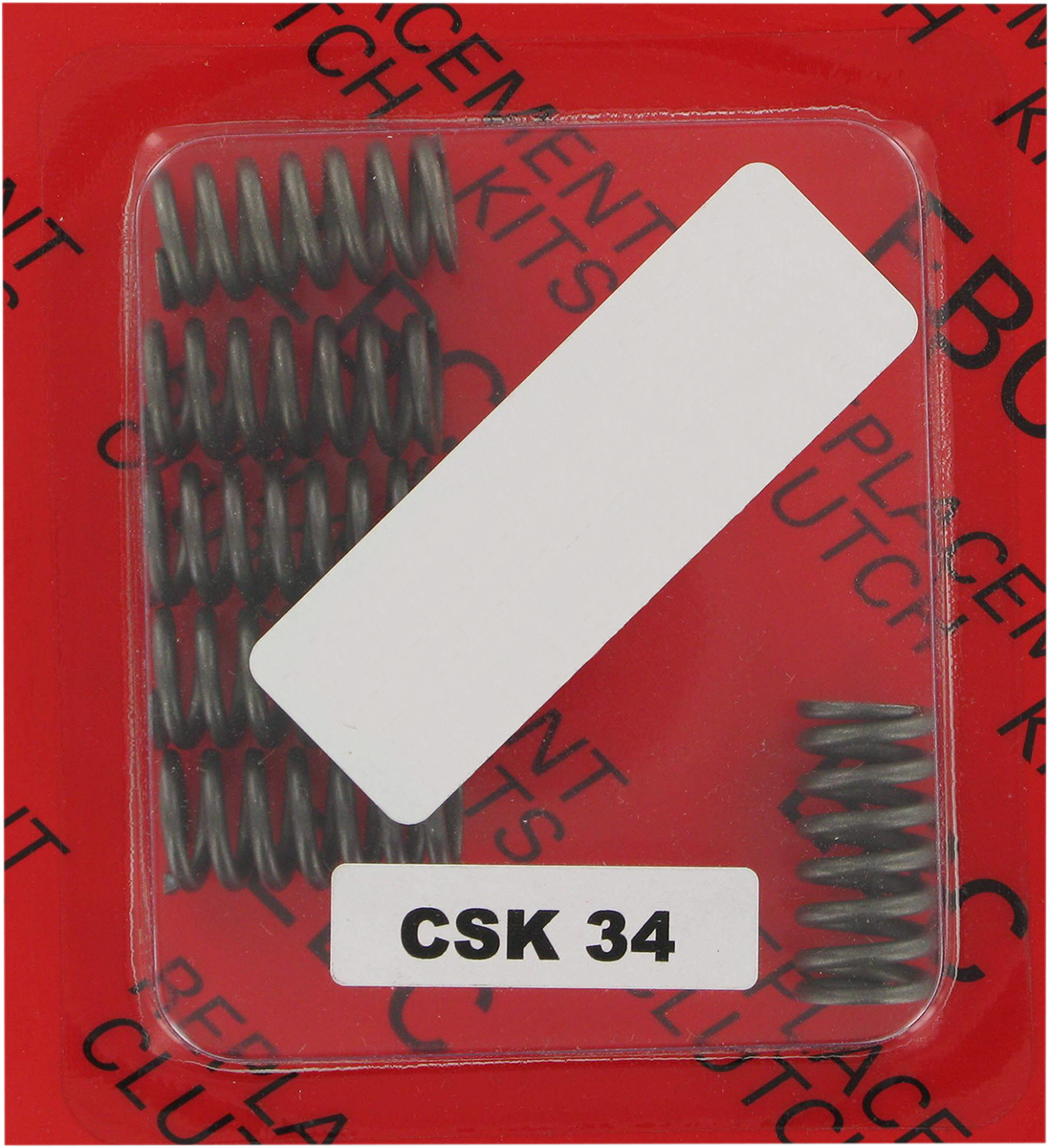
Clutch Springs
About Clutch Springs
Clutch springs set how firmly a clutch clamps or when a belt-driven clutch engages and shifts. Riders replace weak or sagging springs to cure slip, and tune with different rates to change engagement and shifting.
Two kinds are listed. Manual clutch springs come as a set, for example for Honda and Triumph, and they press the plates together. CVT springs, named primary and secondary, control a belt clutch. The primary spring has a high engagement version for Can-Am, and the secondary spring comes in colors, such as red and orange, so read the listing for the rate. Springs in a set should match, so replace the set together and use the one listed for your make and model.
Brands in this category include EPI, EBC, Barnett, Dynojet and Hinson Racing. Weights and rollers for a CVT clutch are in Additional Clutch Parts, and plates are in Clutch Plates & Discs. For a matched set, see Complete Clutches & Kits. The whole group is Clutch Parts & Kits.
FAQs on UTV and ATV clutch springs
What does the secondary spring do in a CVT clutch?
It sets how hard the driven clutch grips the belt and how quickly it moves back toward the low ratio. A stiffer spring generally keeps the clutch in a lower ratio for longer. Follow the maker's chart for your machine.
When does the clutch start to engage?
In a CVT, the primary spring and weights decide the engine speed at which the machine starts to move. A higher-rate primary spring raises that engagement speed. Springs listed as high engagement are meant for this purpose.
Should I replace all the springs in a manual clutch at once?
Yes. Springs in a set should match, because one weak spring gives uneven pressure on the plates and can cause slip. Replace them as a set whenever you service the clutch.
How do I check the free length of clutch springs?
Measure each spring with a caliper and compare it with the length in your manual. Replace a set that is shorter than the limit or that has springs of unequal length. Springs lose tension with age and heat.
Will a stiffer spring fix a slipping clutch?
Only if weak springs are the cause. Slip is often due to worn plates, oil contamination or a cable out of adjustment. Stiffer springs can also make the lever heavier, so check the plates and the cable first.