
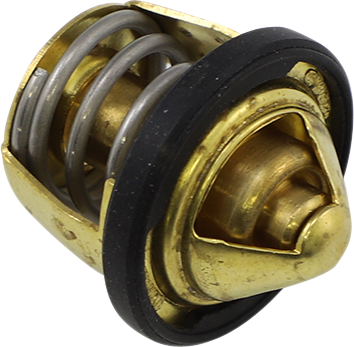
Thermostats & Housings
About Thermostats & Housings
A thermostat is a temperature-controlled valve in the cooling system. It stays closed while the engine warms up, so coolant does not flow to the radiator, then opens at its set temperature to let the coolant circulate. This category lists replacement thermostats from All Balls for Polaris machines, including the ATP 500, ACE, General 1000, Sportsman 550, Hawkeye 325 and RZR 800.
A thermostat tends to fail in one of two ways. Stuck closed, the engine overheats quickly. Stuck open, it takes a long time to warm up and may run cooler than normal. Because thermostats open at a particular temperature, use the one listed for your model rather than one that merely fits the housing. When you replace it, check the housing and the seal or O-ring, and note which way the old thermostat faces before removing it. Then refill the system with coolant and bleed out the air.
Pick your machine in the Ride Finder at the top of the page. For other cooling parts, see Water Pumps, Pipes & Hoses, Temperature Sensors & Switches and Radiator & Coolant Reservoir Caps, all part of Engine Cooling.
FAQs on thermostats
What are the signs of a bad thermostat?
A thermostat stuck closed makes the engine overheat quickly, and one stuck open makes it slow to warm up and run cool. A temperature gauge that behaves oddly, or an upper hose that stays cold long after the engine should be hot, can also point to the thermostat.
Can I run an engine without a thermostat?
It is not recommended, and it is not a cure for overheating. The thermostat helps coolant circulate at the right speed to warm the engine and hold its temperature. Without it, the engine may run too cool or cool less effectively.
Does the temperature rating of a thermostat matter?
Yes. The rating is the temperature at which it opens, and the engine is designed for a specific value. Use the thermostat listed for your model so the engine runs at the temperature the maker intended.
Which way does the thermostat go in?
Follow your manual, and note the orientation of the old thermostat and the position of any bleed hole before you remove it. Install the new one the same way, with a good seal, since a thermostat fitted backward can cause overheating.