
Radiator & Coolant Reservoir Caps
About Radiator & Coolant Reservoir Caps
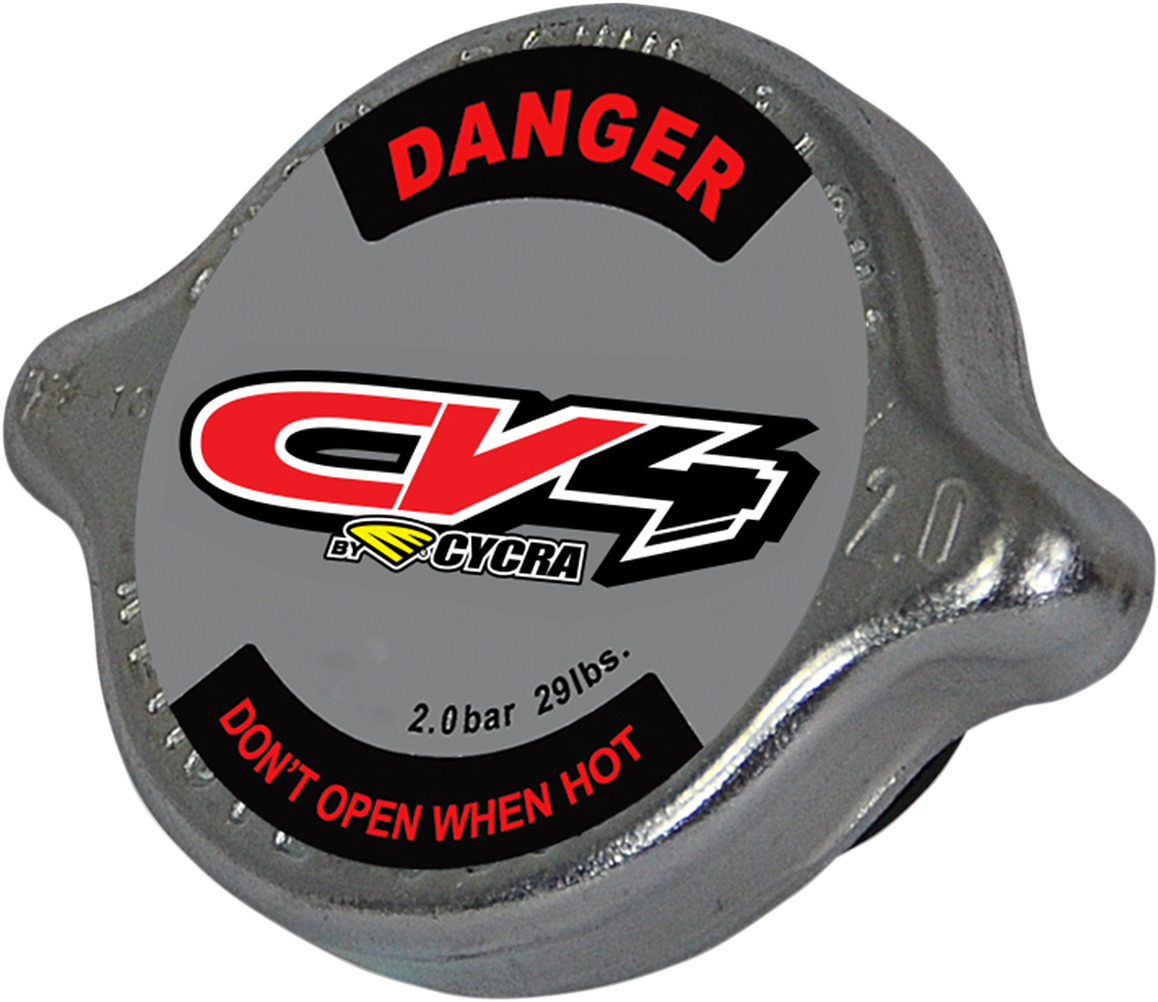
A radiator cap seals the cooling system and holds it at a set pressure. Pressure raises the boiling point of the coolant, so the engine can run hot without boiling over, and a spring valve in the cap opens at its rating to release excess pressure. This category has two silver pressure caps, one rated 1.8 bar and one rated 2.0 bar, from Twin Air and CV4.
The pressure rating is the number to match. Use the rating your machine's maker specifies, because a lower-rated cap can let coolant vent early, and a higher one puts more pressure on the hoses and radiator than they were built for. One bar is about 14.5 psi, and the listing gives the figure in bar. The cap must also fit the filler neck. Replace a cap with a damaged seal or a weak spring, since a failing cap can cause coolant loss and overheating.
Check your machine's cap rating in the owner's manual or listing. Related parts are Pipes & Hoses, Thermostats & Housings and Water Pumps, all part of Engine Cooling.
FAQs on radiator caps
What pressure radiator cap does my UTV or ATV need?
Use the pressure rating your manufacturer specifies, which is listed in the owner's manual or on the old cap. Caps are rated in bar or psi, and one bar is about 14.5 psi. Do not choose a different rating unless the maker says it is acceptable.
What happens if the radiator cap is bad?
A weak or leaking cap cannot hold pressure, so coolant can boil at a lower temperature, vent out through the overflow and lead to overheating. Signs include coolant loss with no visible leak and a cap that looks worn or has a damaged seal.
Can I fit a higher pressure cap for extra cooling?
That is not recommended. A higher-rated cap raises the system pressure beyond what the radiator, hoses and seals were designed for, and it can cause a leak or a burst hose. Keep to the specified rating.
Is it safe to remove the radiator cap on a hot engine?
No. A hot cooling system is under pressure, and the coolant can spray out and scald. Let the engine cool fully, then turn the cap slowly to the first stop to release pressure before removing it.