
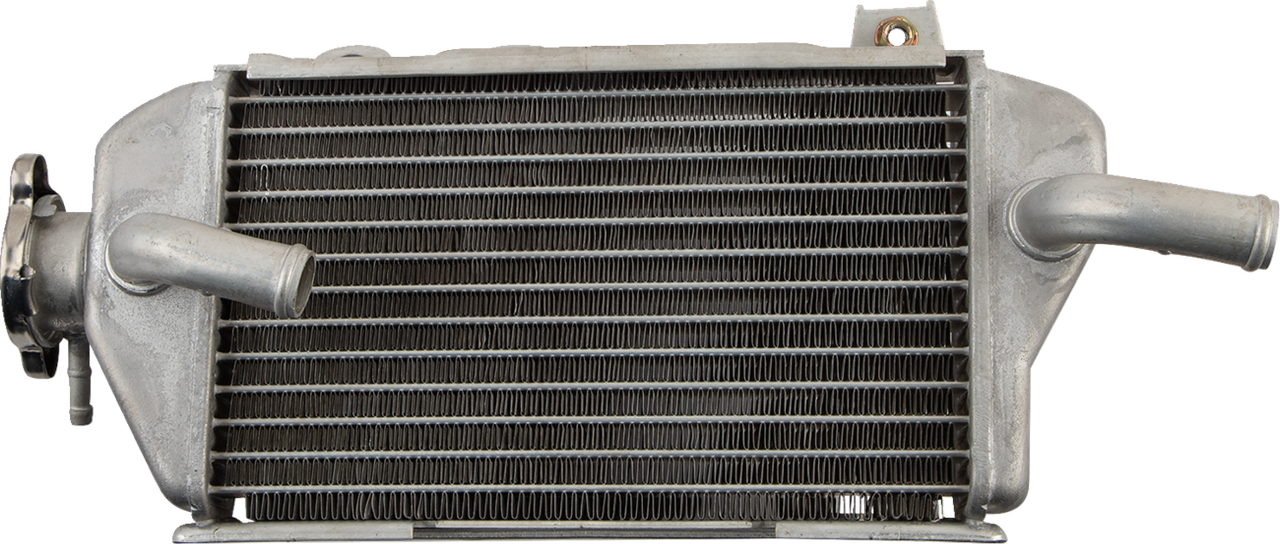
Radiators
About Radiators
The radiator is where the engine's heat leaves the coolant. Its thin fins are easily bent or crushed in a crash, a rock strike or a tip-over, and the core can corrode or leak over time. Riders replace a radiator after impact damage or when a leak or blockage cannot be fixed, and they fit guards and braces to protect the next one.
Radiators on many dirt bikes come in left and right halves, so the listings are marked left or right and you may need both. They are listed as replacement OEM-style units for models from Honda, Yamaha, Kawasaki and Husqvarna and KTM. Before you buy, check the make, model and years carefully, since the shape and hose connections differ. Billet radiator guards and braces add protection, and a radiator fin tool helps straighten bent fins on a radiator you want to keep. With a new radiator, plan to replace the coolant and inspect the hoses, clamps and cap too.
Brands in this category are Moose Offroad and Moose Utility. Related categories are Radiator & Coolant Reservoir Caps, Pipes & Hoses and Clamps & Hardware. All sit under Engine Cooling. Pick your machine in the Ride Finder at the top of the page to see radiators made for it.
FAQs on motorcycle radiators
Do I need both a left and a right radiator?
Only if both are damaged. Many dirt bikes have a radiator on each side, and they are sold separately and marked left or right. Left and right are as seen from the rider's seat. Inspect both, since an impact on one side can also stress the other.
Can I repair a bent radiator instead of replacing it?
Bent fins can often be straightened gently with a fin tool, which restores airflow. A radiator that leaks from a crack in the core or a damaged tank is harder to repair reliably. If coolant is escaping from the core, replacement is the safer choice.
What should I replace along with a new radiator?
Plan on fresh coolant of the type your manual specifies. It is also a good time to check the hoses, clamps and radiator cap, since an old cap or a tired hose can cause the same problems. Bleed the air out of the system when you refill.
Do radiator guards affect cooling?
Guards are designed to protect the radiator from rocks and impacts while letting air through. Choose a guard made for your model so that the mounting is correct, and keep mud from packing between the guard and the radiator fins.
What are the signs of a clogged radiator?
Signs include overheating even with enough coolant, a radiator that stays hot in one area, and coolant that looks rusty or sludgy. External clogging from packed mud also blocks airflow. Clean the fins first, then have the system checked if the problem remains.