
Gaskets, Seals & Kits
About Gaskets, Seals & Kits
Gaskets and seals keep oil and coolant in and dirt and air out, and a joint that is reassembled with an old gasket is a common source of leaks. Owners shop here for a leak at a cover or the cylinder base, or to get the full set of seals for a rebuild.
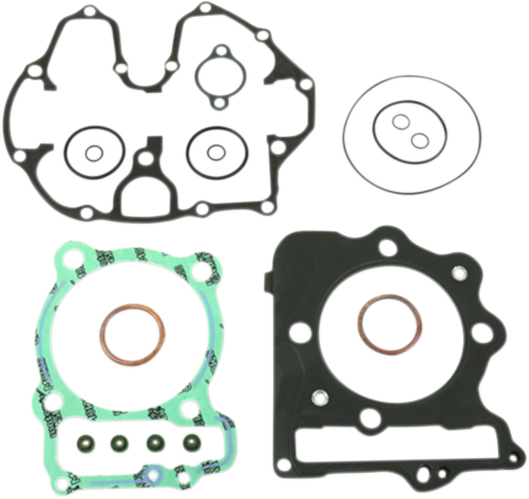
Choose the scope that suits the job. A top end gasket kit is for work on the cylinder and head. A complete gasket kit covers the whole engine for a full rebuild. An oil seal set provides the seals for the rotating shafts, and single gaskets such as a stator crankcase cover gasket cover one joint. The samples here are for Polaris, Honda, Yamaha, Arctic Cat, Kawasaki and Suzuki machines. Replace a gasket whenever the joint is opened, clean the surfaces with a plastic scraper without gouging them, and use sealant only where your manual calls for it.
Brands in this category include Athena, Vertex, Cometic, Moose Offroad and Prox. Pick your machine in the Ride Finder at the top of the page. Related pages are Engine Rebuild Kits & Components, Pistons, Rings & Piston Kits, Complete Cylinders and Service Kits, all part of Engines & Engine Parts.
FAQs on engine gaskets and seals
What is the difference between a top end and a complete gasket kit?
A top end gasket kit contains the gaskets for the cylinder and head area, which is what you need for a piston or cylinder job. A complete gasket kit adds the gaskets for the rest of the engine, such as the crankcase and covers, for a full rebuild.
Can I reuse an engine gasket?
It is best not to. A gasket compresses when it is tightened, and it can tear when removed. Reusing one risks a leak. Fit a new gasket whenever a joint is opened, and clean both surfaces first.
Do I need gasket sealant on a new gasket?
Only where the service manual says so. Many gaskets go on dry, and too much sealant can squeeze out and block oil passages. Where sealant is called for, use the type the manual specifies, in a thin even layer.
How do I prepare the surface for a new gasket?
Remove all of the old gasket with a plastic scraper or a soft tool, avoid gouging the metal, and clean the surface with a solvent that leaves no residue. The surface should be clean, dry and flat before the new gasket goes on.
Why does my engine leak after a gasket replacement?
Common causes are a dirty or damaged surface, a gasket that is not seated, uneven or incorrect bolt torque, and a part that is not the right gasket for the engine. Check the surfaces and tighten the bolts in sequence to the manual's torque.