
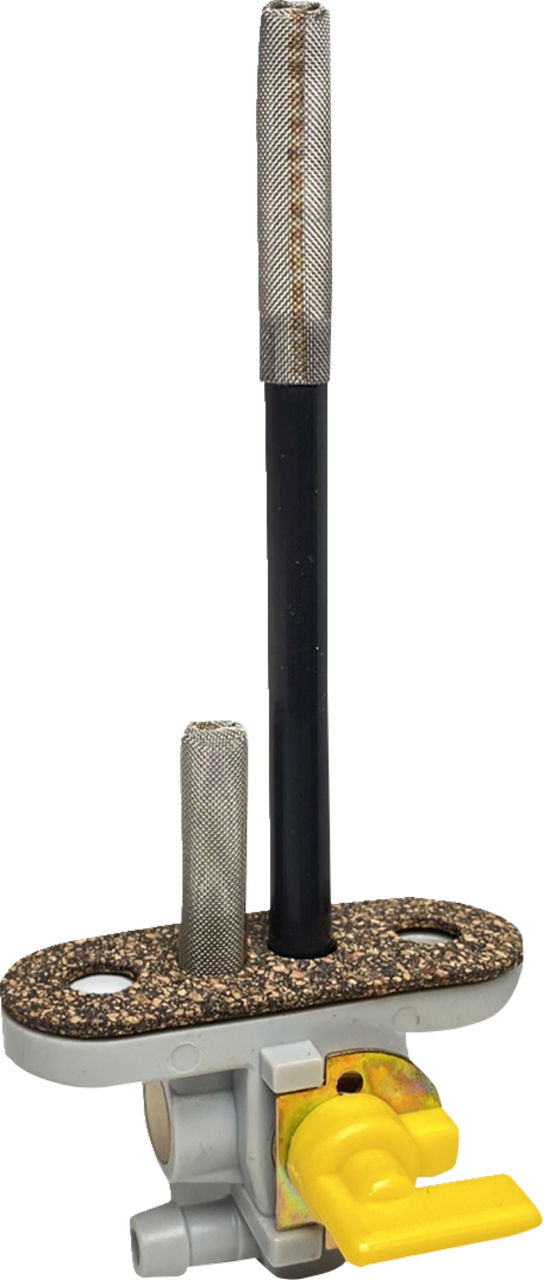
Fuel Valves & Petcocks
About Fuel Valves & Petcocks
A fuel valve, often called a petcock or fuel tap, is the shutoff at the bottom of the tank that lets fuel flow to the carburetor or pump. When the seals inside wear, it can drip, seep or fail to shut off fully, which is the usual reason owners shop for rebuild kits and replacement valves.
Two choices come up most. Rebuild kits replace the worn seals, gaskets or O-rings in a petcock, which fixes a leak with less work than replacing the valve, as long as the valve body and lever are sound. A cracked body or damaged threads means a whole new valve. Many ATV petcocks have On, Off and Reserve positions, and some work from engine vacuum, so match the style to your machine. The titles here list kits for Honda, Yamaha, Kawasaki, Suzuki and Arctic Cat models, plus inline valves that fit in the fuel hose, and air cut-off valve kits for Yamaha and Kawasaki. Pick your machine in the Ride Finder at the top of the page.
Brands here include Quantum, Dynojet, All Balls, Quad Logic and SP1. For the rest of the fuel path, see Fuel Filters, Fuel Hoses, Lines & Pipes and Carburetor Parts. The whole group is Air Intake & Fuel Delivery.
FAQs on fuel valves and petcocks
What do the On, Reserve and Off positions on a petcock mean?
On draws fuel from the main part of the tank and Off stops the flow. Reserve draws from a lower pickup, so you have a little fuel left when the main supply runs out. Some vacuum-operated petcocks open on their own when the engine runs, so check your manual.
Why is my petcock leaking fuel?
The usual cause is a worn or hardened O-ring, seal or gasket inside the valve, sometimes with dirt stopping it from seating. A leak can show up as fuel dripping from the valve or fuel in the carburetor or engine after the machine sits. A rebuild kit or a new valve fixes it.
Should I rebuild a petcock or replace it?
Rebuild it when the body, lever and threads are in good shape and only the seals are worn. Replace the valve if the body is cracked, the threads are damaged or the lever no longer seats. Match either one to your machine's make, model and year.
Do I have to drain the tank to change a petcock?
Usually yes, or the tank has to be nearly empty, because the valve is the outlet at the bottom. Drain fuel into an approved container, work outdoors away from sparks and replace any hose that is cracked. Follow your manual's steps for your model.