
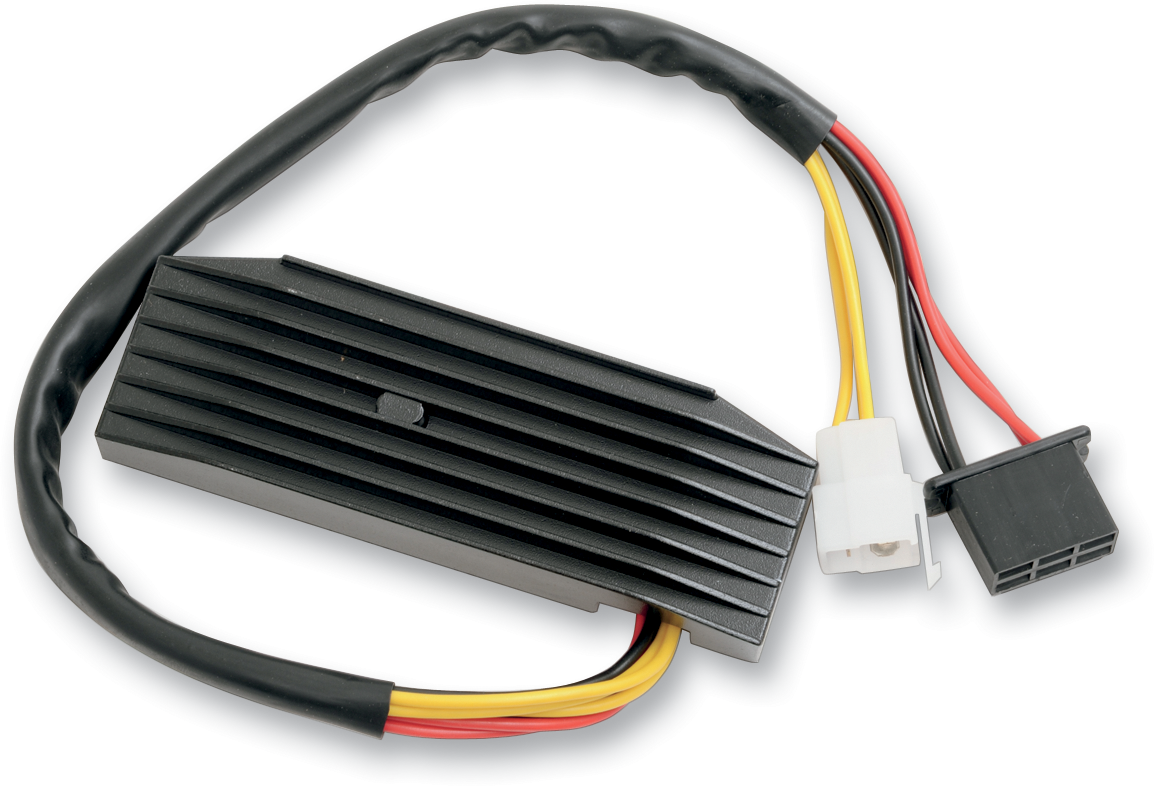
Voltage Regulators & Rectifiers
About Voltage Regulators & Rectifiers
The stator produces alternating current, but the battery and the rest of the electrical system need steady direct current at a controlled voltage. The rectifier converts the AC to DC, and the regulator keeps the charging voltage within range. On many ATVs and UTVs both are in one box, which is why listings say rectifier/regulator. A failing unit shows up as a battery that will not charge, an overcharged battery, or bulbs that burn out.
Buy by make, model and year. The plug and wiring have to match your machine, and the samples here cover Polaris, Indian, Kawasaki, Honda, Yamaha, Arctic Cat, Hyosung and CF Moto. Some listings are OE-style replacements and others are upgraded designs, so read the title. Before fitting a new unit, check the connector for melted or burnt pins and test the stator, because a weak stator or a bad connector can destroy a new regulator. Mount the unit where the old one was, since these parts heat up and need airflow.
Brands in this category are RM Stator and Rick's Motorsport Electric. For the rest of the charging system, see Stators & Magnetos, Batteries, Fuses & Fuse Boxes and Wiring Harnesses, Cables & Connectors, all part of Electrical & Ignition Components.
FAQs on voltage regulators and rectifiers
What does a regulator rectifier do?
A regulator rectifier turns the alternating current from the stator into direct current for the battery and holds the charging voltage steady. Without it, the battery would be undercharged or overcharged, and bulbs and electronics could be damaged.
How can I tell if the regulator rectifier is bad?
Signs include a battery that keeps going flat, a battery that overheats or swells, and bulbs that burn out quickly. With the engine running, a healthy system shows a higher voltage at the battery than the battery's resting voltage. Your manual gives the correct range.
Can a faulty regulator damage the battery?
Yes. A regulator that lets the voltage run too high can overcharge and damage the battery, and one that does not charge enough leaves it flat. Replace a faulty unit promptly, and check the battery afterward, since it may have been harmed.
Why does my new regulator keep failing?
Repeat failures usually have another cause. A failing stator, a melted or corroded connector, a poor ground connection or a damaged battery can all overload a regulator. Test the stator and inspect the wiring before installing another.
Can I use a regulator from a different model?
Do not assume it will work. Connector shape, wire layout and electrical ratings vary between machines, even within one brand. Use the unit listed for your make, model and year, and pick your machine in the Ride Finder at the top of the page.