
Clamps & Hardware
About Clamps & Hardware
Hose clamps hold the coolant hoses on the radiator, water pump and engine, and a clamp that has rusted, stretched or lost its grip is a common source of a slow coolant leak. Riders shop here when they fit new hoses, when an old clamp is damaged, and when they want a matched set that suits the bike.
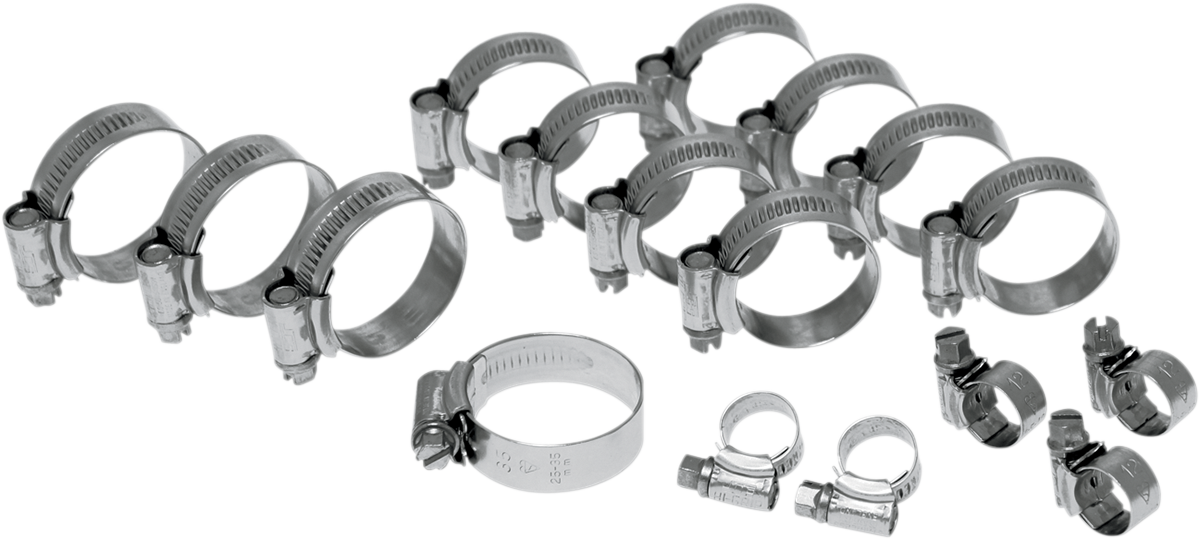
Most listings are clamp kits sold for a particular make and model, which come with the right number of clamps sized for that bike's hoses. These are the quickest way to do the job properly. A universal option, such as ear clamps made for cooling systems, suits other hose sizes, but you need to measure the hose diameter first. Ear clamps are crimped shut with pincers and are usually replaced once removed, while screw-type clamps can be tightened and reused if they are in good condition. A radiator drain plug is also listed here for some Honda and Kawasaki models. When you change clamps, refill the system with the coolant your manual specifies and let any trapped air out as the manual describes.
Brands in this category include Motion Pro, Works Connection and Samco Sport. Clamps go with Pipes & Hoses, and you may need to check the Radiators and Water Pumps where the hoses connect. The whole group is Engine Cooling. Pick your machine in the Ride Finder at the top of the page to see kits made for it.
FAQs on cooling system clamps
Do I need new clamps when I replace radiator hoses?
It is a good idea. Old clamps can be rusted, stretched or deformed from earlier tightening, and they might not hold new hose evenly. A clamp kit for your model includes the right number and sizes, so it takes the guesswork out of the job.
What size hose clamp do I need?
The clamp has to fit the outside diameter of your hose. The listing for a model-specific kit already matches the hoses on that bike. For a universal clamp, measure the hose, then pick a clamp whose range includes that size.
What is an ear clamp?
An ear clamp is a metal band with a raised tab, or ear, that is pinched closed with a special pincer tool. It gives an even grip around the hose and has no screw to loosen. The ear is deformed during fitting, so a removed ear clamp is normally replaced.
Can I overtighten a hose clamp?
Yes. Too much force can cut into the hose or distort the fitting, which causes leaks. Tighten until the hose is held firmly without being crushed, then recheck for leaks when the engine is warm and the system is under pressure.
Why does my bike lose coolant but show no puddle?
A slow leak at a clamp or hose end can evaporate on a hot engine and leave only a crusty residue or stain. Inspect each clamp, hose end and the water pump on a cold engine, and pressure-test the system if you cannot find the source.