
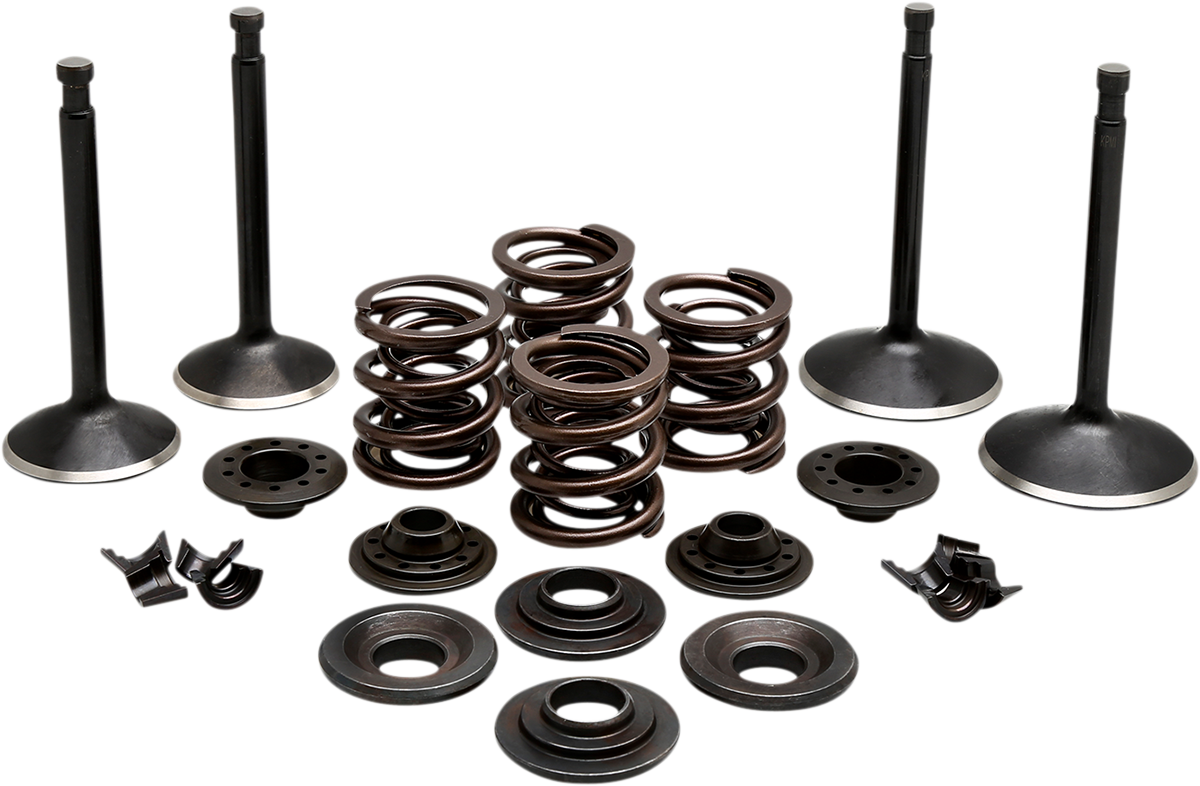
Engine Valves
About Engine Valves
Intake valves let the fuel and air in and exhaust valves let burned gas out, and they open and close thousands of times a minute. A valve that burns, bends or loses its seal causes low compression and rough running, and riders replace valves during a top-end rebuild or when upgrading.
Intake and exhaust valves are different parts, and listings name them, so order the right one for the position. Valve material matters: steel valves are standard, and the titanium valves listed here for dirt bikes such as the Yamaha YZ450F and Honda CRF250F are lighter and made for race engines, usually with shorter service intervals. Follow the maker's guidance on inspection. Valves are sold singly or as kits, and valve shims in 5 packs also appear here, sized by diameter and thickness in millimeters. Match the model and year, and check that the stem size suits the guide.
Brands here include S&S Cycle, Prox, Wiseco, Hot Cams and Kibblewhite. Pick your machine in the Ride Finder at the top of the page. New valves seat against the head and work with Valve Guides, Springs & Parts, and are driven by Camshafts and Rocker Arms & Parts. The wider group is Valvetrain Components.
FAQs on engine valves
What is the difference between intake and exhaust valves?
The intake valve admits the fuel and air mixture and the exhaust valve releases burned gas. They are usually different in size and material, since the exhaust valve runs hotter. They are not interchangeable, so order the one for each position.
Do the valve seats need work when I fit new valves?
Often, yes. Seats are inspected and recut or lapped so the new valve seals properly. This is normally done by a machine shop, and your manual gives the limits for seat width and wear. A new valve on a damaged seat will leak.
Why are titanium valves used in race engines?
Titanium is lighter than steel, so the valve train has less moving mass, which helps at high rpm. Titanium valves generally wear faster than steel ones, so follow the maker's inspection intervals and replace them when they are due.
How can I tell if a valve is burned or leaking?
Low compression, hard starting and a rough idle can point to a valve that is not sealing. A compression test or leak-down test, followed by a head inspection, shows which valve is at fault and whether the seat or the valve needs work.
Should valves be replaced as a set?
If one valve has failed, check the others and the guides, springs and seats. Many rebuilds replace the full set of valves together, particularly on high-hours engines.