
Wheel Nuts, Bolts & Studs
About Wheel Nuts, Bolts & Studs
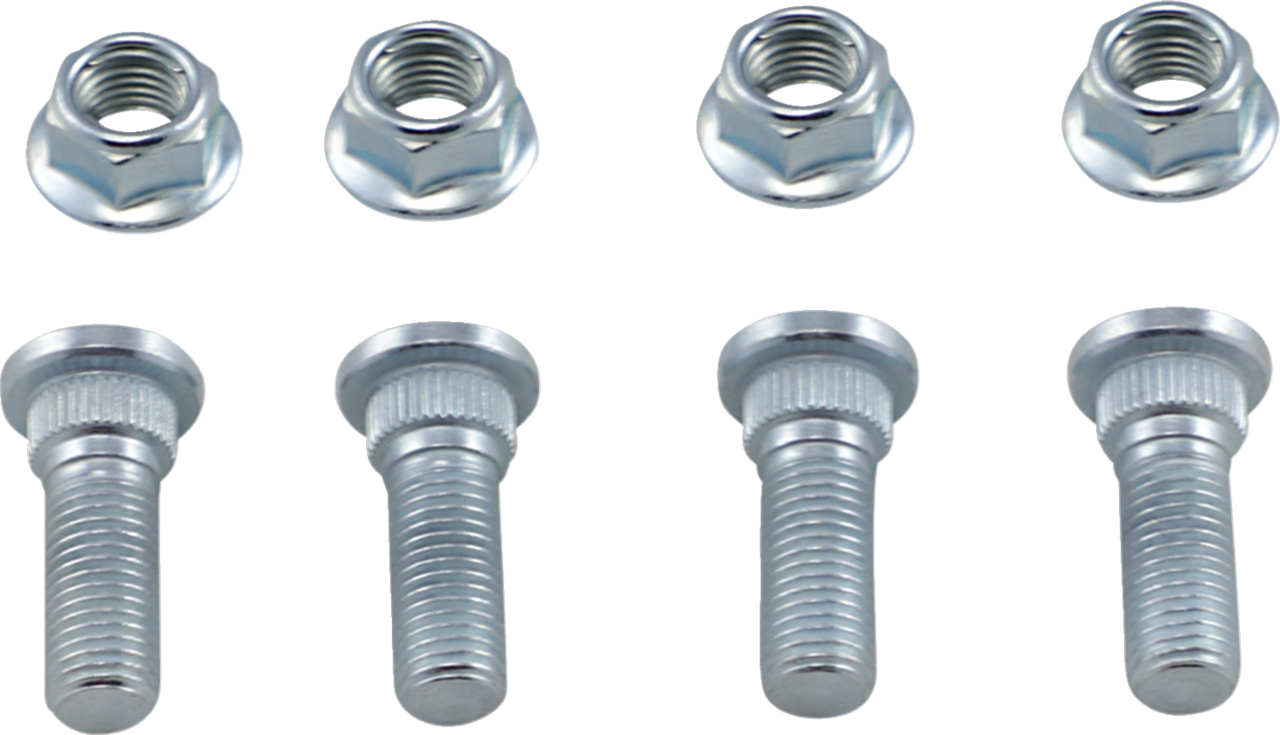
Wheel nuts, bolts and studs are what hold a wheel on the hub, so they deserve more attention than their size suggests. Owners shop here for damaged threads, rounded or corroded lug nuts, a broken stud after a hard hit, or a different nut style to go with new wheels.
Match four things: thread, seat, drive and quantity. Thread is size and pitch, and the listings include M10 x 1.25, M12 x 1.25 and 3/8 in.-24. Seat is the shape of the nut where it meets the wheel, and tapered nuts, such as the 60 tapered style, need a wheel with a matching taper. Drive is how you turn the nut: a hex nut takes a normal socket, while splined nuts need the matching key that comes with them.
Quantity matters because some are sold each and others in packs, such as 16. Stud kits are listed by machine, such as the Suzuki 250 QuadRunner and Polaris Ranger, and often include the nuts. Some spacers listed here come with studs fitted.
Brands here include BOLT, AMS, ITP, Raceline Wheels and Fast-Trac. Pick your machine in the Ride Finder at the top of the page for stud kits made for it. If you are changing the wheels themselves, see Wheels, and see also Wheel Spacers & Adapters. All of them are part of Wheels, Tires & Parts. This bolt pattern guide covers how to identify your hub.
FAQs on wheel nuts and studs
How do I find the thread size of my lug nuts or studs?
Look in your owner's manual or service manual, which lists the wheel stud thread for your model. You can also match the old nut or stud with a thread gauge. Typical sizes include M10 x 1.25 and M12 x 1.25, but never guess, because a wrong thread damages the stud.
What is the difference between tapered and flat-seat lug nuts?
The seat is the surface where the nut meets the wheel. A tapered nut has an angled cone that centers in a matching tapered hole, while a flat-seat nut sits against a flat surface. Use the style your wheel is made for, or the wheel can loosen.
How tight should wheel nuts be?
Tighten to the torque in your owner's manual, using a torque wrench and a cross pattern so the wheel seats evenly. Check them again after the first short ride. Never use an impact wrench to fully tighten them, because that can overstress the studs.
Can I reuse lug nuts and studs?
If the threads are clean and undamaged and the seat is not deformed, they can be reused. Replace any nut that is rounded, cracked, corroded or cross-threaded, and replace a stud that is bent, stretched or stripped.
Why do some lug nuts need a special key?
Splined nuts have a fine grooved drive instead of a hex shape, so they need the matching splined key that comes with them. They can look cleaner and suit narrow wheel openings. Keep the key with the machine so you can remove a wheel on the trail.