
Drive Belt Pulleys & Tensioners
About Drive Belt Pulleys & Tensioners
On a belt-drive bike, toothed pulleys do the job that sprockets do on a chain bike, and the belt rides on them. Riders shop here for a worn pulley, a different tooth count to change the gearing, retaining bolts, or a primary chain tensioner.
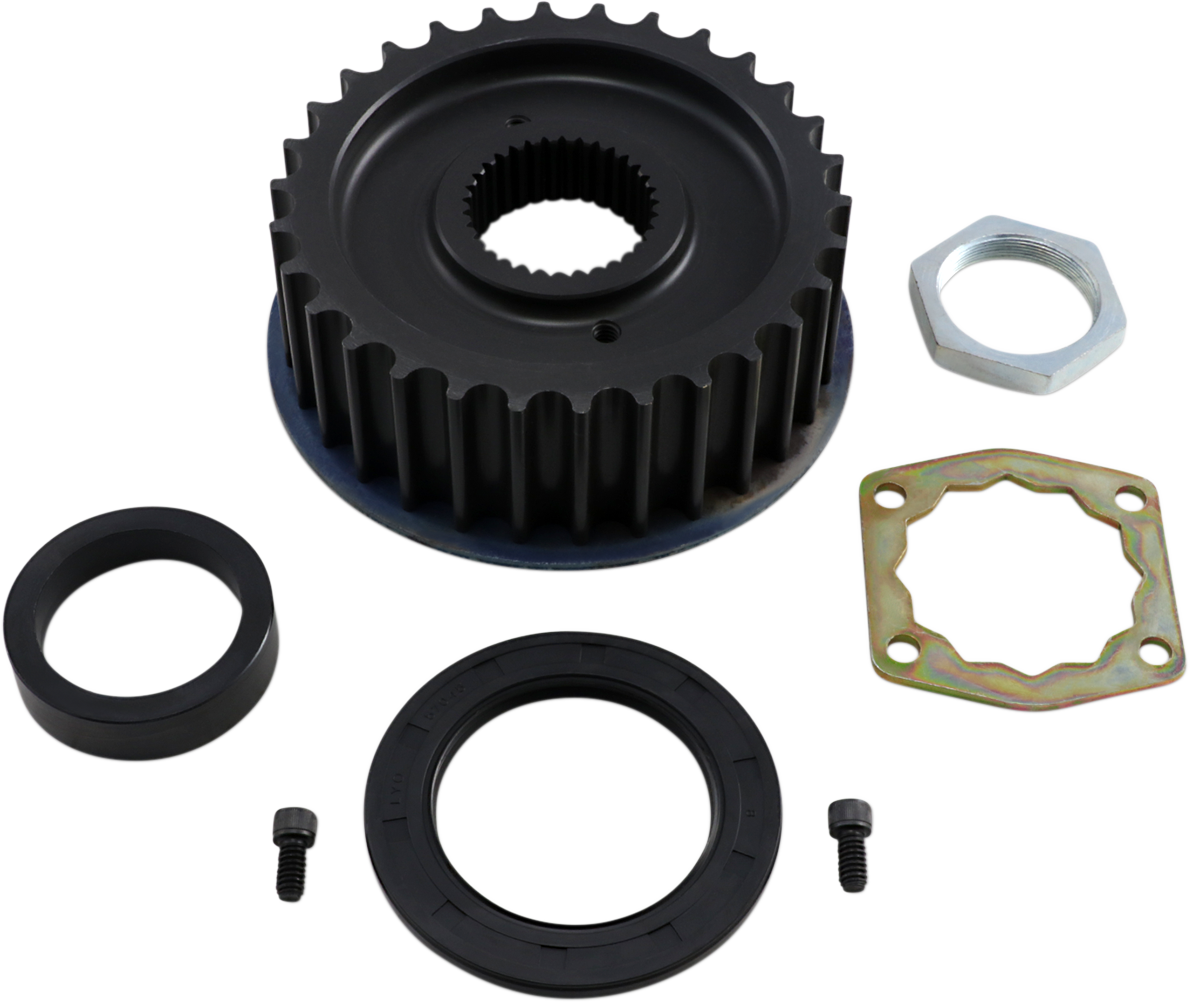
The tooth count matters most. The samples show front transmission pulleys with 28, 30, 31 and 34 teeth, and the listings note that a 30-tooth pulley gives good acceleration while a 34-tooth one suits smooth cruising. A different tooth count can also change the belt length needed, so check the listing for belt fit. The pulley must match the belt width and tooth profile, and the samples include belts listed at 1-1/8 inch and 1-1/2 inch widths. Fit is also model specific, with pulleys listed for Sportster, Dyna and M8 years. Inspect pulleys for nicks and worn teeth whenever you change a belt, since damage can cut a new belt.
Brands here include Andrews, Drag Specialties, PSR, Performance Machine (PM) and Belt Drives Ltd. Pick your machine in the Ride Finder at the top of the page. For the belts themselves see Final Drive Belts & Chains and Primary Drive Belts & Chains, and for sprocket-driven bikes see Sprockets. All are part of Final & Primary Drive Parts & Kits.
FAQs on belt drive pulleys and tensioners
How does changing the front pulley tooth count change gearing?
A pulley with fewer teeth lowers the gearing, which gives quicker acceleration and lower road speed at a given engine rpm. A pulley with more teeth raises the gearing, which gives relaxed cruising at the cost of some acceleration. Check the listing and your manual before changing it.
Do I need a new belt when I change the pulley size?
Often you do. A different tooth count changes the length of the belt path, so the old belt may be too long or too short. Check the listing for the belt length it is meant to run with, and the adjustment range your axle allows.
Should I replace the pulleys when I replace a drive belt?
Inspect them. Worn teeth, nicks and bent flanges can cut or wear a new belt. If the pulleys look damaged, renew them with the belt. Always match the belt width and tooth profile to the pulley.
How tight should a drive belt be?
Follow the tension method and figure in your service manual, which may use a deflection measurement or a belt tension gauge. Too tight loads the bearings, and too loose lets the belt ride badly or skip. Recheck after the first ride.
Why is wheel alignment important with a belt drive?
A belt is sensitive to alignment. If the rear wheel is off, the belt can run against a pulley flange and wear its edge. Align the wheel as the manual describes, and check that the belt sits centered on both pulleys.