
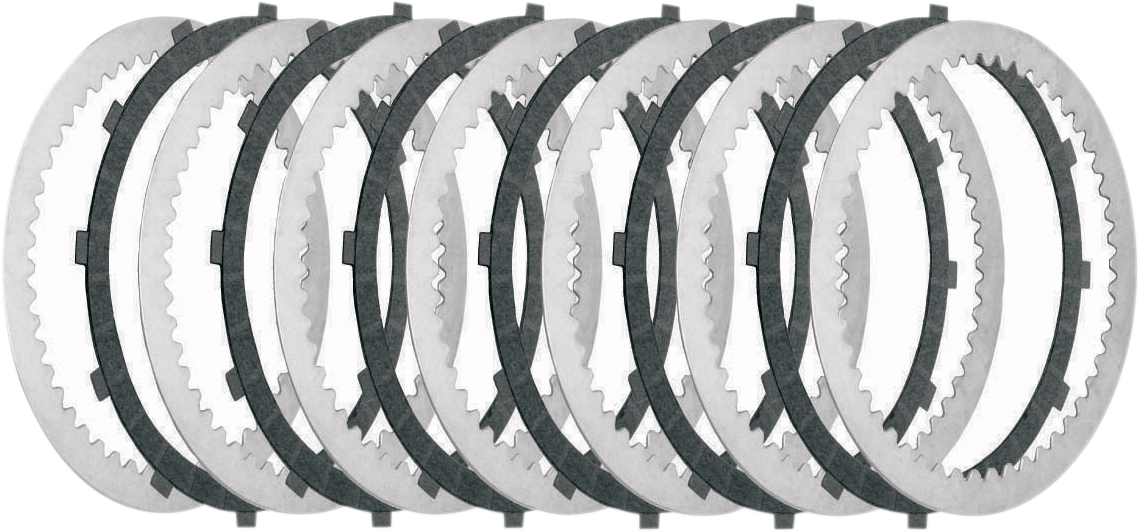
Clutch Plates & Discs
About Clutch Plates & Discs
A wet clutch is a stack of friction plates alternating with steel plates, and the friction plates are what wear. Riders shop for new plates when the clutch slips under power, when old plates have glazed or worn below the service limit, or when they want a different friction material.
Plates are sold as friction sets, steel sets or complete plate kits for a model, so check which you are ordering. Friction materials in the samples include Kevlar as well as standard plates, and the material affects how the clutch engages and handles heat, so read the maker's notes. Plate counts and sizes differ between engines, and the samples are listed for Harley-Davidson Sportster and Big Twin models and for machines such as the CRF150R, CR 500R, Suzuki, KTM and Gas Gas. Measure friction plates against the service limit, check steel plates for warping and bluing, and fit the stack in the order the manual shows.
Brands here include Drag Specialties, Barnett, Prox, Trask and Baker Drivetrain. Pick your machine in the Ride Finder at the top of the page. Plates work with Clutch Springs, Clutch Baskets & Hubs and Complete Clutches & Kits, all part of Clutch Parts & Kits.
FAQs on clutch plates and discs
What is the difference between friction plates and steel plates?
Friction plates carry a friction lining and engage slots in the clutch basket. Steel plates are plain metal discs that engage the inner hub. They alternate in the stack, and squeezing them together transmits power. The friction plates wear down, while the steel plates mostly need checking for warping and heat damage.
How do I measure clutch plate wear?
Measure the thickness of each friction plate with calipers and compare it to the minimum in your service manual. Check several plates, since they can wear unevenly. Lay the steel plates on a flat surface to check for warping, and look for blue heat marks.
Do I need to replace the steel plates with new friction plates?
Not always. Steel plates that are flat, smooth and not discolored can be reused, but many riders renew both sets for even engagement. Warped, grooved or blue steel plates should be replaced, or they can make new friction plates slip or drag.
What does a Kevlar friction plate change?
The friction material affects how the clutch engages and how it handles heat. Materials such as Kevlar are chosen for durability and grip under hard use, but feel can differ from stock plates. Read the maker's notes and pick plates made for your type of riding.
Does the order of clutch plates matter?
Yes. Friction and steel plates alternate, and some clutches start or finish the stack with a particular plate. Plate counts differ between engines, so fit them in the order shown in your service manual. Fitting them in the wrong order can stop the clutch from working properly.