Clutch Parts & Kits
About Clutch Parts & Kits
The clutch connects the engine to the gearbox so you can pull away, shift and stop without stalling. Riders shop here when it slips under power, drags with the lever pulled, feels heavy, or has a stretched cable, and when they want a stronger clutch or a different cover.
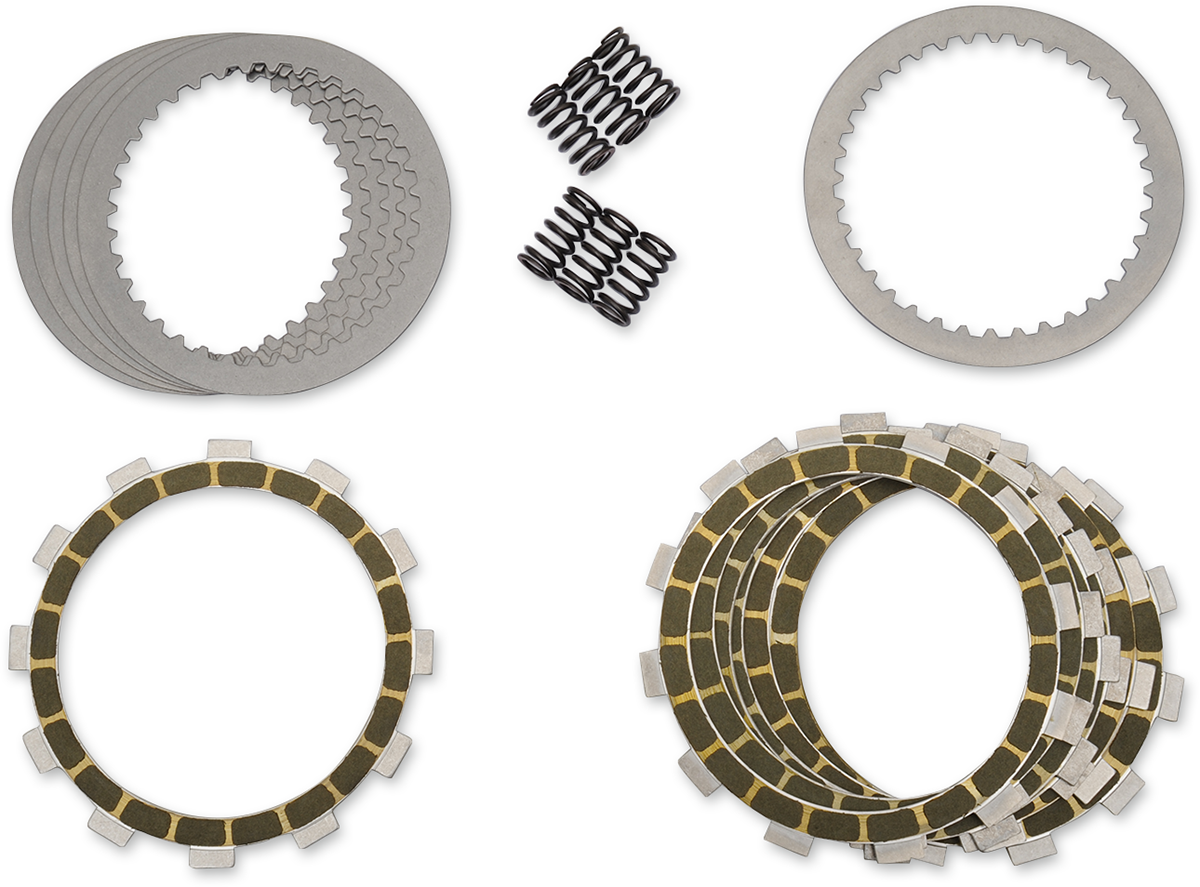
The plates are the part that wears. Clutch Plates & Discs are the friction and steel plates, and the samples here include aramid and carbon fiber friction materials as well as standard plates. Clutch Springs clamp the stack together. Clutch Baskets & Hubs hold the plates, and their slots can wear into notches. Complete Clutches & Kits bundle several parts in one purchase, which suits a full rebuild or an upgrade. Replace plates as a full set, and check the springs and basket while the clutch is open.
The lever side has its own parts. Clutch Cables connect the lever to the release on cable-operated bikes, and Clutch Hydraulics suit bikes with a hydraulic clutch. Clutch Covers close the case over the clutch, and Additional Clutch Parts is there for the smaller items.
Brands here include Athena, Andrews, Braking, EBC and Barnett. Clutch parts are specific to model and year, so pick your machine in the Ride Finder at the top of the page. For the rest of the drivetrain, go up to Transmission & Drivetrain or across to Final & Primary Drive Parts & Kits.
FAQs on motorcycle clutch parts
What makes a motorcycle clutch slip?
The usual causes are worn friction plates, weak clutch springs, oil contamination of the plates, and a cable with no free play so the clutch never fully engages. Inspect the plates and springs against the service limits in your manual before deciding what to replace.
Should I replace clutch springs along with the plates?
Check them first. Springs lose tension over time, and weak ones let new plates slip. The service manual gives a minimum spring length, so measure each one against it. Many riders fit new springs with new plates so the whole stack clamps evenly.
How do I tell whether my bike has a cable or hydraulic clutch?
Look at the left handlebar lever. A cable clutch has a wire running from the lever to the engine. A hydraulic clutch has a small fluid reservoir and master cylinder at the lever and a line instead of a cable. Your owner's manual also says which type you have.
Why does a cable clutch need free play?
A small amount of slack at the lever lets the clutch engage fully. With no free play the plates may not clamp completely, and the clutch can slip and overheat. Set free play at the lever or cable adjuster to the figure in the manual.
Do I need to soak new friction plates in oil?
Most wet-clutch makers advise soaking friction plates in clean engine oil before assembly, so they are wet when the engine first runs. Follow the instructions in your kit, because some plates and some makers have their own advice.