
Wiring Harnesses, Cables & Connectors
About Wiring Harnesses, Cables & Connectors
Wiring harnesses, cables and connectors are the parts that carry power and signals around the bike. Riders shop here to replace a harness with burned or chafed wires, to repair a damaged connector, to run new wire for lights or accessories, or to extend or replace the wiring and cables at the handlebar when fitting new bars.
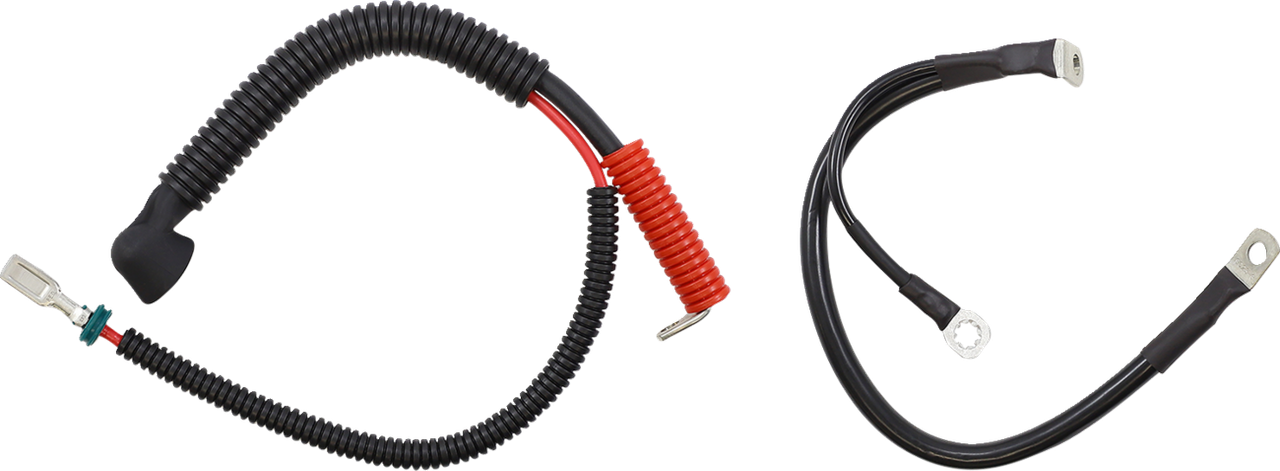
The first split is between a ready-made harness and a build-it-yourself approach. A model-specific harness, such as the Harley-Davidson ignition wiring harness or a harness for a Spyder, plugs into the original connectors. Wire sold on spools and individual connectors suit repairs and custom work. For wire, the gauge matters: a lower gauge number means thicker wire, which carries more current, so size it to the load and put a fuse in the circuit. For connectors, match the type, the number of positions and male or female ends, and the locking style. Battery cables are listed by length. Handlebar wiring extensions and stainless braided handlebar cable and brake line kits are also in this category, and those are specific to the model and year.
Brands in this category include Heretic, DEI, Warn, Ciro and Drag Specialties. For protection and switching, see Fuses & Fuse Boxes and Relays, and for power, Batteries. All of these are in Electrical & Ignition Components. Pick your machine in the Ride Finder at the top of the page for harnesses made for it.
FAQs on motorcycle wiring and connectors
What wire gauge should I use for motorcycle accessories?
It depends on the current the accessory draws and the length of the run. A lower gauge number is thicker wire and carries more current. Check the accessory's instructions for the recommended gauge, and protect the circuit with a fuse rated for that wire.
Can I repair a motorcycle wiring harness instead of replacing it?
Small repairs to a few damaged wires or a broken connector are possible with the right terminals and heat-shrink tubing. If the insulation is brittle, burned or the damage is widespread, a replacement harness is the more reliable route. Compare the harness with the wiring diagram for your model.
How do I choose the right connector?
Match the connector family, the number of positions, male or female ends, and whether it locks. Connectors of the same series fit each other and use terminals made for them. If you are replacing a damaged plug, compare it to the original or check the wiring diagram.
Does a battery cable need to be a specific length?
Yes, a cable should reach its terminals without stretching, and it should not be so long that it loops against moving parts or heat. Use the cable length listed for your model, and make sure the terminals match the battery and the starter or frame connection.
Why should I disconnect the battery before changing wiring?
Disconnecting the battery cuts power to the bike's wiring, which reduces the chance of a short circuit, a blown fuse or damage to electronic parts while you work. Disconnect the negative cable first and reconnect it last.