
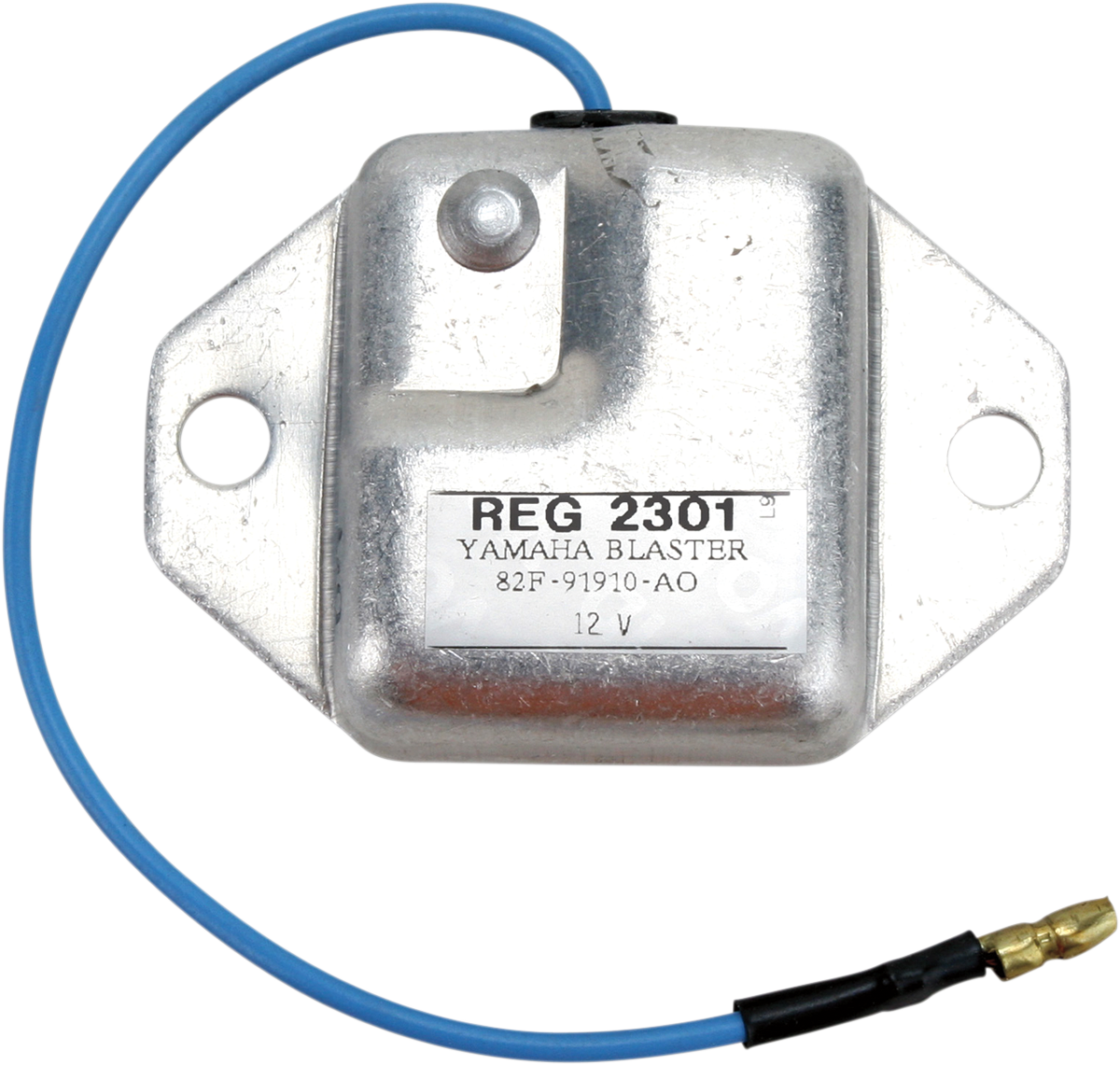
Voltage Regulators & Rectifiers
About Voltage Regulators & Rectifiers
The voltage regulator holds a motorcycle's charging system within a safe range, so the battery gets charged without being overcharged. The rectifier, often built into the same unit, converts the alternating current from the stator into the direct current that the battery and the electrical system use. A failing unit shows up as a battery that will not charge, a battery that overcharges and swells or loses water, lights that flicker or blow bulbs, or a dead bike.
Fit comes first. Regulator and rectifier units are listed by make, model and years, and the plug and mounting vary between models, including Honda, Yamaha, Polaris, Indian, CF Moto and Harley-Davidson. Many replacements use MOSFET technology, which is a common design for newer units. If your bike runs a lithium-ion battery, look for listings that say they are compatible, because some regulators are not suited to them. Regulators give off heat, so they should be mounted as the instructions show, with a clean connection to a metal surface and good airflow. Before you buy, test the stator and battery, since a bad stator can damage a new regulator.
Brands in this category include Colony, Drag Specialties, WSM, Parts Unlimited and ACCEL. Related categories are Batteries, Alternators & Generators and Fuses & Fuse Boxes. Pick your machine in the Ride Finder at the top of the page.
FAQs on regulators and rectifiers
What is the difference between a voltage regulator and a regulator rectifier?
A voltage regulator limits charging voltage to a safe level. A regulator rectifier does that and also converts the stator's alternating current into direct current. Most modern motorcycles use the combined unit, so the listing titles use the terms interchangeably. Match the part to your model.
What happens when a voltage regulator fails?
Watch for a battery that is not charging, a battery that is hot or overcharged, bulbs that blow or flicker, and stalling. Measure the battery voltage with the engine running and compare it with your service manual. Also check the connector for melted or discolored terminals.
Will a regulator work with a lithium-ion battery?
Only if it is made for it. Lithium batteries need a controlled charging voltage, and some older regulators do not suit them. Choose a regulator that the listing says is lithium-ion compatible, and follow the battery maker's guidance.
Where should a voltage regulator be mounted?
Mount it where the maker's instructions show, on a clean metal surface or heat sink with some airflow. The regulator sheds heat, so a poor mounting or a blocked airflow can shorten its life. Keep the connectors clean and secure.
Can a bad stator ruin a new regulator?
It can. A stator with a shorted or failing winding can overload the replacement unit and burn it out. Test the stator against your service manual when you replace a regulator, particularly if the old one failed more than once.