
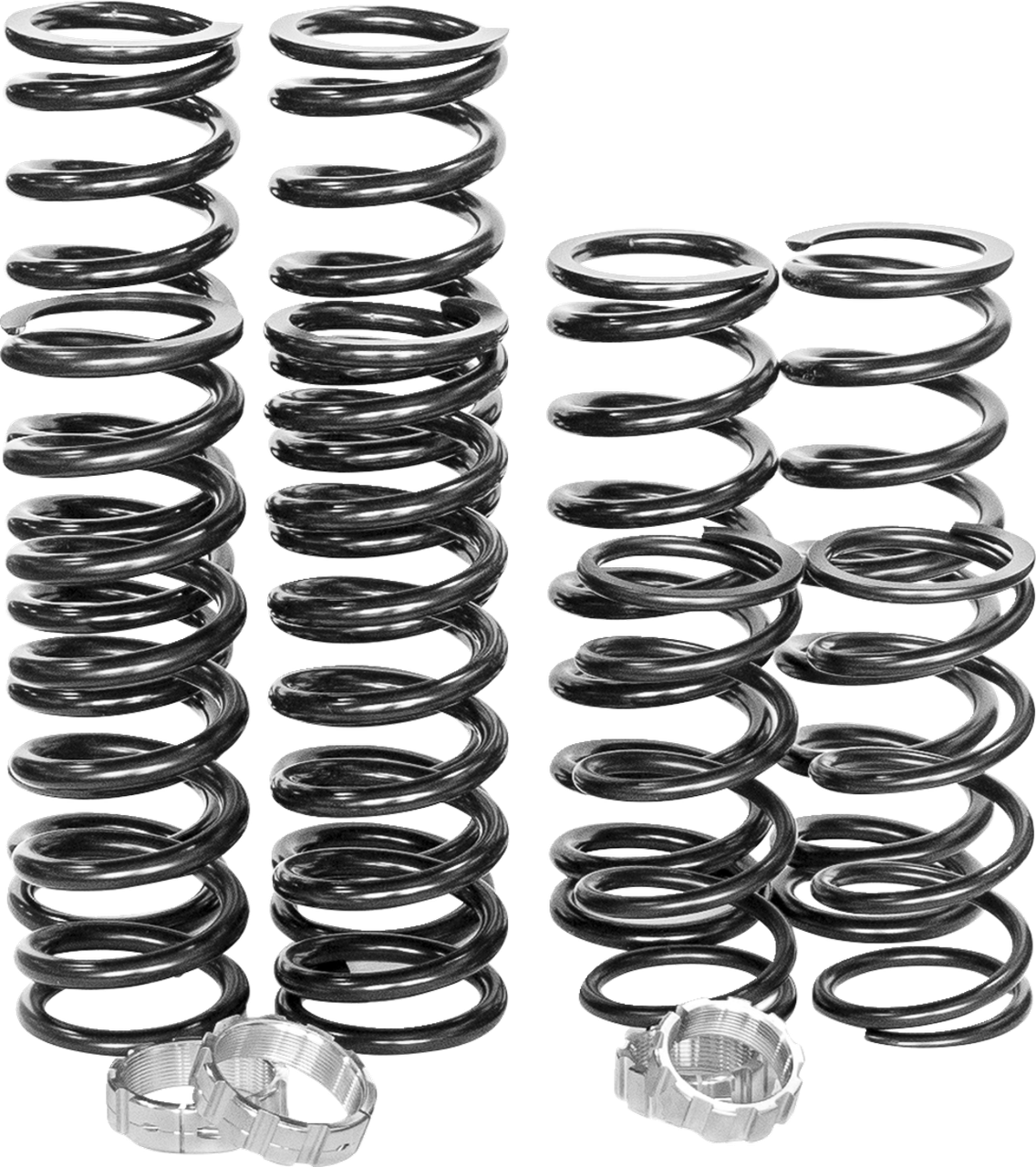
Suspension Springs
About Suspension Springs
The spring carries the machine's weight and sets how it sits and how far it moves under load. Springs sag or break over time, and owners also change them to match a heavier load, a plow or winch, a different rider weight or a firmer feel. Most listings here are shock springs for a particular machine, front or rear, in colors such as black, silver and blue.
The number to understand is the spring rate, listed in pounds per inch of compression. The samples range from about 100 lb/in to over 330 lb/in, and some listings give a range, such as 325 to 800 lb/in, rather than one figure. A higher rate is stiffer. Too soft a spring lets the machine bottom out, and too stiff a spring rides harshly. The spring must also fit the shock body, as with the RZR Turbo S listing for Fox shocks, so match the machine, years and position, and change springs on the same axle as a pair.
Brands in this category include EPI, SDI, Race Tech, High Lifter and Race Shop Inc.. Pick your machine in the Ride Finder at the top of the page. Shocks are in Shocks & Coil Overs, and height changes are in Lowering, Lift & Long Travel Kits. The group is in Steering & Suspension.
FAQs on shock springs
What does spring rate mean?
Spring rate is how much force it takes to compress a spring by one inch, listed in pounds per inch (lb/in). A higher number is a stiffer spring. Choose a rate that suits your machine's weight and use, and check what the spring and shock makers suggest.
Do I need stiffer springs if I add a plow or winch?
Extra weight on the front sits on the front springs and can make the machine sag. A higher rate spring may help, but follow the spring maker's guidance for your machine and load. Check that the ride height and handling are still right after the change.
Can I replace just one spring?
Replace springs on the same axle together. A new spring next to a tired one can leave the machine leaning to one side and handling unevenly. If you change the rate, change both sides to the same rate.
How can I tell that a spring is worn?
Look for a machine that sits lower than it did, bottoms out sooner, or leans to one side. Check the spring for cracks, a broken coil or rust damage. Compare the ride height from side to side, and against the figures in your service manual.
Is it safe to compress a shock spring at home?
Only with the right tool and care. A compressed spring stores a lot of energy and can cause injury if it slips. Use a proper shock spring compressor and follow its instructions, or have a shop do it.