
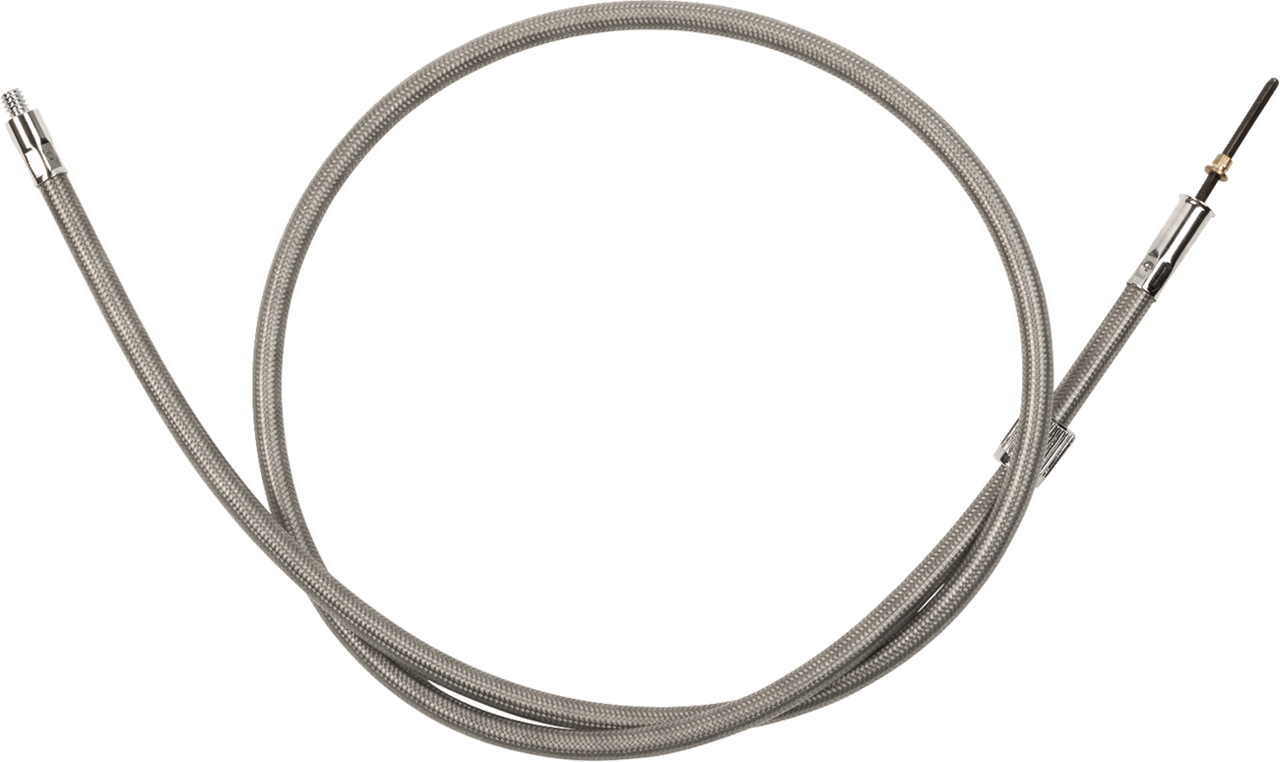
Instrument Drive Cables
About Instrument Drive Cables
A speedometer or tachometer cable is a flexible shaft that spins inside a sleeve and turns the gauge from a drive point on the wheel or engine. It wears out, so riders replace it when the needle bounces, swings, sticks or stops moving, or when new handlebars or a relocated gauge need a longer one.
Cables are model-specific, so the first filter is make and model. The listings here cover Honda, Kawasaki, Yamaha and others. Then choose speedometer or tachometer, check the length where it is listed in inches, and look at the outer covering, which the samples show as vinyl, braided or Armor Coat. The front-wheel drive speedometer cables are listed by length, for example 43 inches and 46-1/2 inches. The fittings at both ends must match the gauge and the drive unit. When you route the cable, keep the curves smooth, because tight kinks make the needle jump.
Brands in this category include Drag Specialties, Parts Unlimited and Motion Pro. The gauges these cables drive are in Individual Gauges and Instrument Clusters, and mounts are in Instrument & Gauge Parts. Pick your bike in the Ride Finder at the top of the page. The whole group is Instruments & Gauges.
FAQs on speedometer and tachometer cables
Why does my speedometer needle bounce or stick?
A bouncing or sticking needle often points to a dry, kinked or worn cable, though a dirty drive unit or a faulty gauge can cause it too. Check the cable first: disconnect it, make sure the inner wire turns freely, and look for kinks, frayed sections or a damaged sleeve.
Can I use a speedometer cable in place of a tachometer cable?
Not safely. Both are flexible drive cables, but they are listed separately because the lengths and end fittings differ. Use the cable listed for your model and for the gauge you are connecting, and check the fittings at both ends before you order.
How do I find the right length for a drive cable?
Use the cable listed for your model, since its length is made for the original routing. If you move the gauge or fit taller handlebars, measure the route the cable will take, with smooth curves, and allow enough length that it does not pull tight at full steering lock.
Does a new speedometer cable need lubricating?
Check the maker's instructions. Some cables are supplied ready to fit, while others call for a light coat of speedometer cable lubricant on the inner wire before installation. Use only the lubricant the instructions specify, and do not over-lubricate.
Will a new cable fix an inaccurate speedometer?
Only if the cable is the cause. A worn cable can give a jumpy reading or none at all, but a speedometer that reads steadily wrong is often caused by a different tire size, a changed gear ratio or a worn gauge. Compare the reading with GPS speed to see how far off it is.