
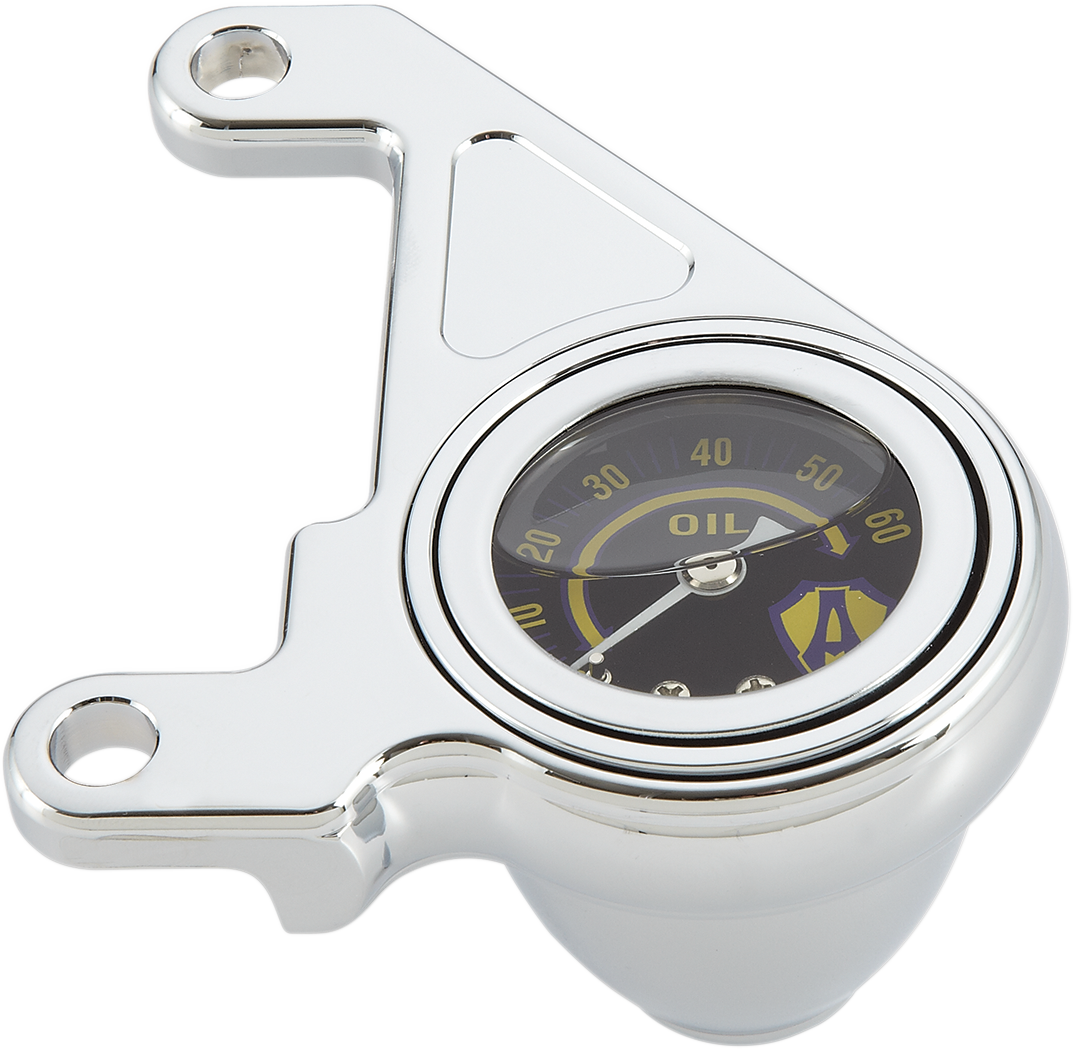
Individual Gauges
About Individual Gauges
A single gauge reports one thing, such as speed, engine speed, oil pressure, voltage or temperature. Riders add or replace one when the stock instrument has failed, when the bike never had that readout, or when a custom build calls for a different style of dial.
Decide what the gauge measures and how it gets its signal. Speedometers and tachometers can be mechanical, run by a cable, or electronic, taking a signal from a sensor, and many electronic ones are programmable to the bike. An oil pressure gauge needs a pressure port: a liquid-filled 1.5-inch gauge with a 1/8-inch back port, for example, is built to be plumbed to a fitting on the engine. Check the dial size, listed in inches, and how it mounts. Many replacement gauges are listed by Harley-Davidson model and year, while universal gauges need a mount of their own. A few listings, such as an air pump with a gauge, are accessories rather than instruments, so read the title.
Brands in this category include GET, HardDrive, Drag Specialties, Dakota Digital and Arlen Ness. Several gauges are combined in Instrument Clusters, mounts and adapters are in Instrument & Gauge Parts, and the wiring is in Wiring Harnesses, Cables & Connectors. Cable-driven instruments use Instrument Drive Cables. The whole group is Instruments & Gauges.
FAQs on individual gauges
What does back port mean on an oil pressure gauge?
The back port is the threaded opening on the back of the gauge where the pressure line or fitting connects. A listing such as a 1/8-inch back port gives the thread size, so you can match it to your fitting. Check the thread, the pressure range and whether a line is included.
Can a programmable speedometer be used on any motorcycle?
Programmable electronic speedometers are set up to suit different bikes, but they still need a compatible speed sensor or signal and a way to mount. Read what the listing says is required, and check that your bike supplies the signal the gauge needs.
What is a multifunction gauge?
A multifunction gauge shows several readings, such as speed, engine speed, temperature or voltage, on one display. It saves space on the bars, but confirm the sensors and wiring it needs and that it supports the readings your bike can provide.
How do I know what size gauge fits my bike?
Measure the opening or mount and compare it with the dial diameter in the listing, such as 1-7/8 inch. Direct-replacement gauges are listed by model and year, so use the Ride Finder to find them. Universal gauges need a cup or mount that suits the bars, risers or forks.
Why does my gauge read wrong?
A wrong reading can come from a bad sensor or sender, a poor ground, a loose connector, or a gauge calibrated for different tires or gearing. Check the connections first, then compare the reading with a known good source, such as GPS speed or a test gauge, and follow the maker's setup instructions.