
Connecting Rods & Parts
About Connecting Rods & Parts
The connecting rod links the piston to the crankshaft and carries the full force of every power stroke. The rod, its big-end bearing and the wrist pin at the piston end wear with hours of use, and a worn or damaged one makes a knocking sound that gets worse and can destroy the engine. Riders replace rods during a bottom-end rebuild, after a failure, or to fit stronger or better-made ones.
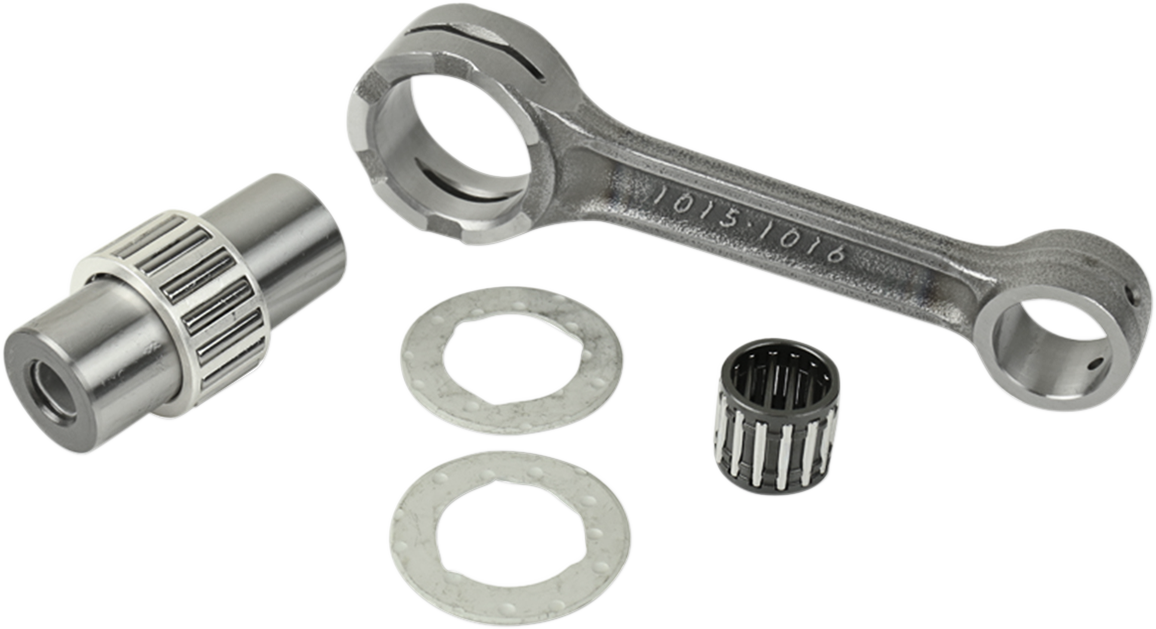
Many listings are connecting rod kits for dirt bikes from Kawasaki, Yamaha, Suzuki, KTM and Husqvarna. Other listings are rod assemblies for Harley-Davidson Big Twin engines. Wrist pins are sold separately in this category, with some marked for Honda and Suzuki. Kits often include the rod and related parts such as a bearing, but the contents vary, so read the listing. Changing a rod normally means taking the crankshaft apart, which needs press tools and measuring equipment, and many riders have a shop do it.
Brands in this category include Athena, Hot Rods, Vertex, Jims and HardDrive. The rod works with Crankshafts, Engine Bearings and Complete Cylinders. The whole group is Engines & Engine Parts. Pick your machine in the Ride Finder at the top of the page for parts made for it.
FAQs on connecting rods
What does a connecting rod do?
A connecting rod links the piston to the crankshaft. It turns the up-and-down push of the piston into the rotating motion of the crank. It is under heavy load on every power stroke, so it must be straight, strong and fitted with the right bearing.
What does a worn rod bearing sound like?
A rhythmic knocking or ticking from the bottom of the engine that rises with speed, metal particles in the oil and a loss of oil pressure are common signs. Stop riding if you hear it, because a failing rod bearing can destroy the engine quickly.
Is a connecting rod kit the same as a rod?
Not always. A kit generally bundles the rod with related parts such as a bearing, but the contents vary by listing. A single rod is just the rod. Read the description to see what is included, and check whether you also need a wrist pin.
Can I replace a connecting rod without removing the crankshaft?
Usually not. On many engines the crankshaft has to come out, and on a built-up crank the rod is pressed onto the crank pin, which needs the right tools and measuring equipment. The crank must also be checked for straightness after reassembly.
What is a wrist pin?
The wrist pin, also called a piston pin, connects the piston to the small end of the connecting rod and lets the rod swing as the piston moves. It is fitted with clips or retainers, and it should be replaced if it shows wear or damage.