
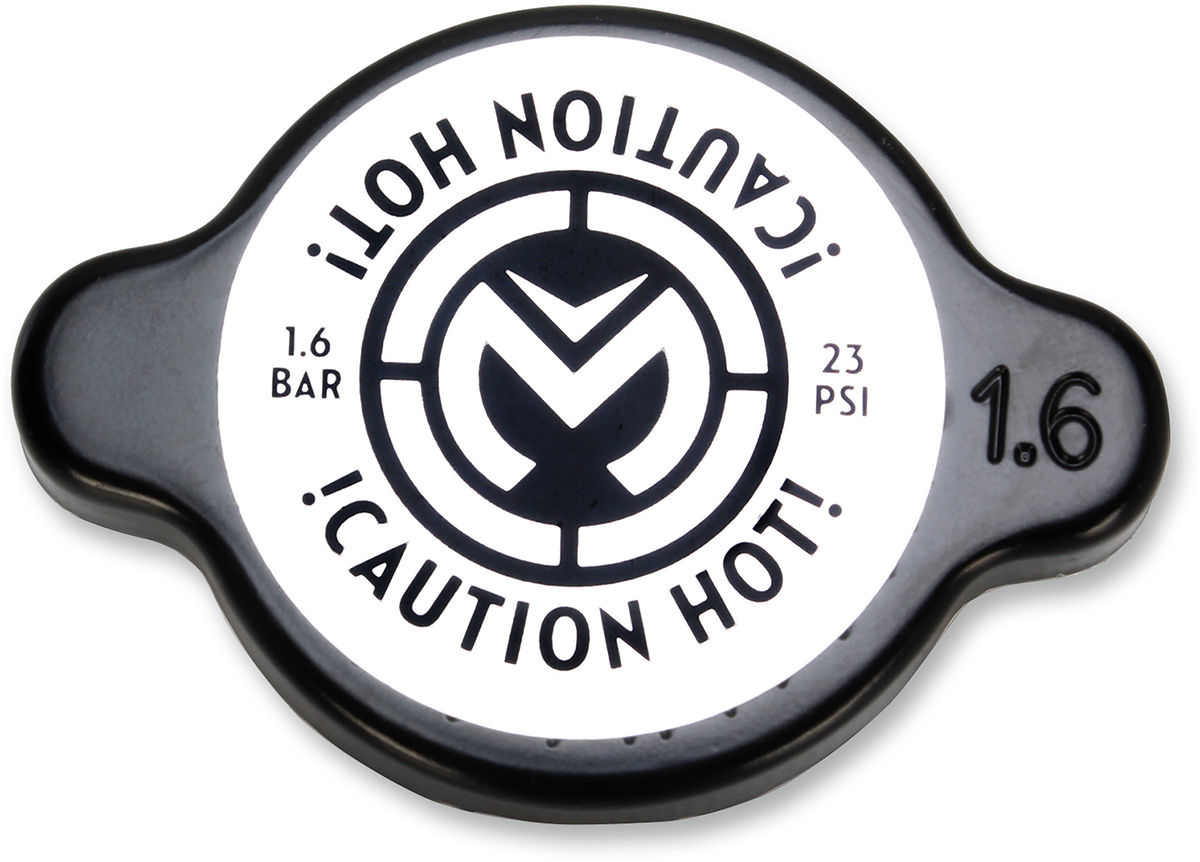
Radiator & Coolant Reservoir Caps
About Radiator & Coolant Reservoir Caps
A radiator cap seals the cooling system and holds it under pressure, which raises the boiling point of the coolant. A cap that no longer holds pressure lets coolant boil over and escape at a lower temperature. Riders replace caps after overheating, when the seal looks worn, or to change to a cap with a different pressure rating or finish.
The key number is the pressure rating, which the listings give in bar or psi, such as 1.4 bar, 2.0 bar or 16 psi. Use the rating that your manufacturer specifies. A higher-pressure cap raises the boiling point but also puts more stress on hoses, seals and the radiator, so do not swap to a higher rating unless the maker says it suits your machine. Caps also differ in the size of the filler neck and in finish, such as chrome, black or silver. Other items in the category include coolant recovery tanks, reservoir covers and coolant sensors. Never open a cap on a hot engine, since pressurized coolant can scald.
Brands in this category include DEI, SLYFOX, Motul, Motion Pro and Twin Air. Related categories are Radiators, Pipes & Hoses and Water Pumps. They are all part of Engine Cooling. Pick your machine in the Ride Finder at the top of the page for parts made for it.
FAQs on radiator caps
What pressure radiator cap does my motorcycle need?
Use the pressure rating listed in your owner's manual or service manual for your machine, and match the cap to it. Caps are marked in bar or psi. If the original rating is not known, check the existing cap's markings or the product listing.
Is a higher-pressure radiator cap better?
Not automatically. A higher rating raises the coolant's boiling point, but it also adds stress to hoses, seals and the radiator. Fit a higher rating only when the cap maker or your manual says it is suitable for your model.
How do I spot a worn radiator cap?
Signs include coolant escaping from the reservoir or overflow, boiling over without the engine being very hot, a worn or cracked rubber seal, and a spring that feels weak. A shop can pressure-test the cap. Caps are low-cost parts, so replacement is a simple fix.
Is it safe to open a radiator cap when the engine is warm?
No. The system is under pressure when hot, and opening the cap can spray scalding coolant. Let the engine cool completely, then turn the cap slowly to its first stop to release pressure before you remove it.
What is a coolant recovery tank?
A coolant recovery tank, or reservoir, collects coolant that expands out of the radiator when hot and draws it back in as the engine cools. It keeps the system topped up and reduces loss. Check the level when the engine is cold.