
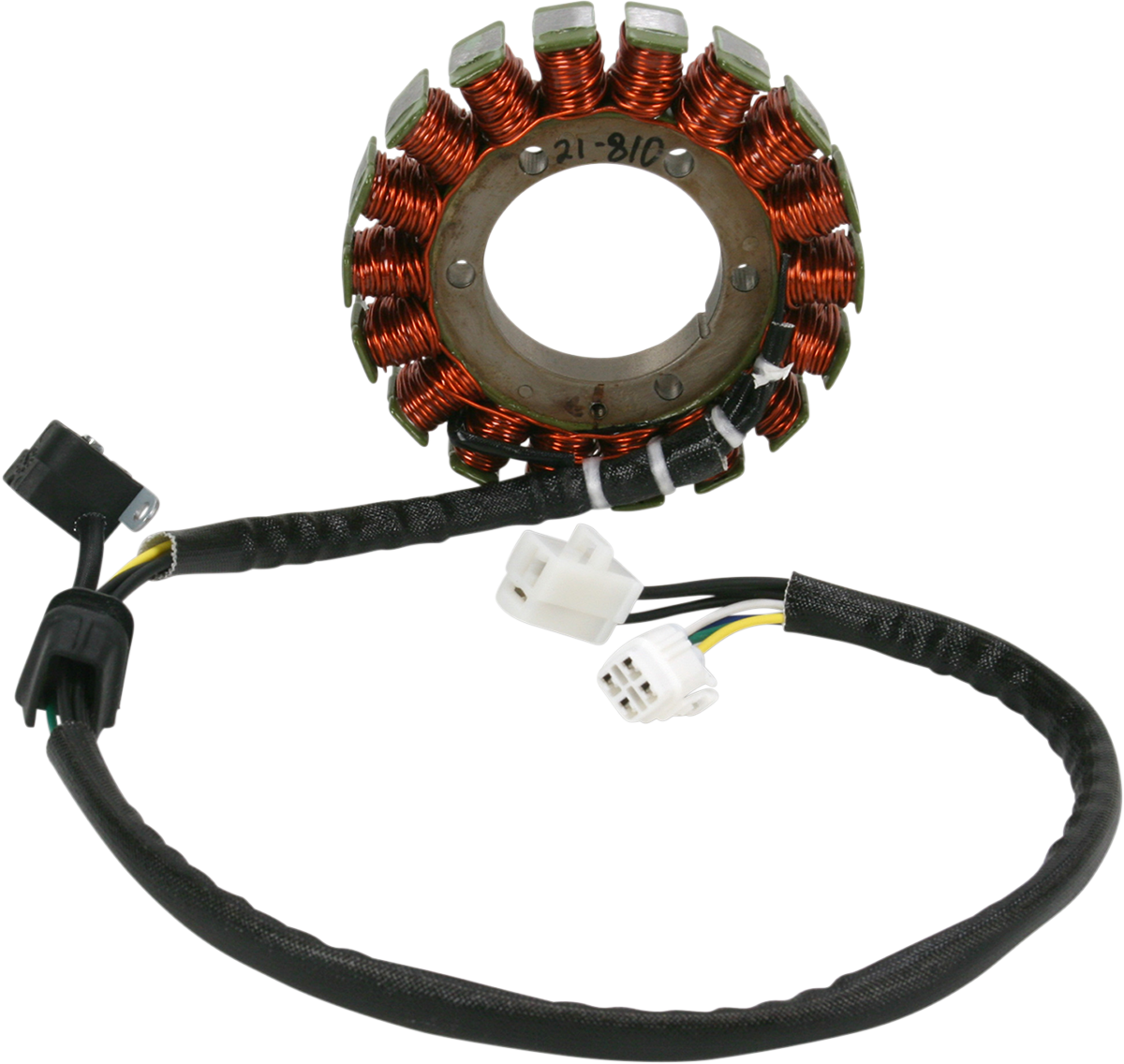
Stators & Magnetos
About Stators & Magnetos
The stator is where a motorcycle makes its electricity. As the flywheel or rotor spins past a set of wound coils, they produce alternating current for the battery, lights and ignition. When it fails, the battery stops charging, the lights fade and the bike eventually dies. Riders shop here to replace a burned or shorted stator, or to fit a higher-output one.
Stators differ widely between engines and are listed by make, model and year, so use the title to match your bike. The listings include plain stators, stator kits with a flywheel, and kits with a pickup and a back plate for two-stroke dirt bikes. Some, such as the Harley-Davidson regulators, are charging parts that work alongside the stator. Before replacing, test it with a multimeter, since the symptoms are shared with a bad regulator or battery. Also check the wiring and connector for burn marks, since melted connectors are a common find on charging systems.
Brands in this category include Pathfinder, HardDrive, Drag Specialties, ACCEL and Fire Power. Related parts are Alternators & Generators, Batteries and Ignition Coils, all in Electrical & Ignition Components. Pick your machine in the Ride Finder at the top of the page.
FAQs on motorcycle stators and magnetos
What is the difference between a stator and a magneto?
Both use magnets and coils to make electricity. A stator usually supplies charging power to a battery. A magneto is a system that also makes the ignition spark without needing the battery. Many bikes use a stator for charging, and some two-stroke bikes use a magneto-type stator.
Why does my motorcycle battery keep dying even though it is new?
A charging fault is a likely cause. The stator may not be producing enough power, or the regulator may not be sending it to the battery. Measure battery voltage with the engine running and compare it with your service manual before you replace parts.
Can I test a stator myself?
Yes. With the stator unplugged, a multimeter can measure the resistance between its winding leads, and an AC voltage reading with the engine running shows its output. Compare both with the figures in your service manual, and check that no lead is shorted to ground.
Do I need to take the engine apart to replace a stator?
Usually not, but the work involves removing a side cover and the rotor, which can need a puller and a torque wrench. A new cover gasket is normally needed. Many riders follow the steps in the service manual or have a shop do it.
Is a higher-output stator worth it?
It helps when you add accessories such as heated gear or extra lights that exceed the stock charging capacity. Check the total electrical load of your accessories against the output the listing states, and use a stator listed for your model.