
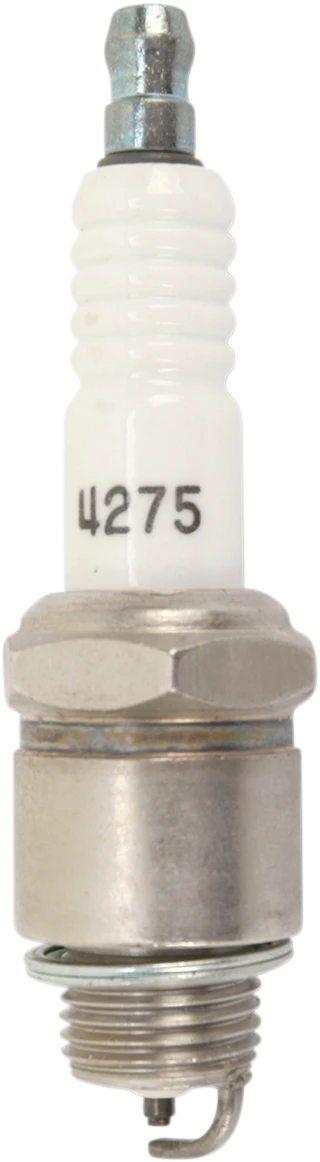
Spark Plugs
About Spark Plugs
The spark plug lights the fuel and air mixture in each cylinder, so a worn, fouled or wrong plug shows up fast as hard starting, a misfire or rough running. Riders replace plugs as part of regular maintenance, when a plug is fouled or damaged, and when they move to a different plug type for their engine.
Every plug is identified by a part number made up of letters and digits, such as BPMR6A or CR8EIA-10. The code, which differs by maker, can show the thread size, whether the plug has a resistor, the heat range and sometimes the electrode material. The heat range describes how quickly the plug sheds heat. The numbering direction differs between makers, so do not compare numbers across brands. Look up the exact number in your owner's manual or in the listing for your model. Standard plugs use a nickel alloy electrode. Iridium plugs, such as the Iridium IX listings, use a fine electrode that is made to last longer. Check the gap with a feeler gauge before you install a plug, even if it is pre-gapped.
Brands in this category include DRC, NGK Spark Plugs, Drag Specialties, Denso and Parts Unlimited. When you change plugs, look at the Ignition Wires, Caps & Boots and Ignition Coils too. Pick your machine in the Ride Finder at the top of the page to see the plugs listed for it.
FAQs on motorcycle spark plugs
How do I find the right spark plug for my motorcycle?
Look up the plug number in your owner's manual or service manual, or pick your machine in the Ride Finder and match the part number. Use the plug the manufacturer specifies for the engine, since the thread, reach and heat range all have to be correct.
What does the heat range of a spark plug mean?
Heat range describes how fast a plug carries heat away from its tip. A colder plug sheds heat faster and a hotter plug holds it longer. The right range is set by the engine maker, and changing it can cause fouling or overheating, so use the specified number.
Do I need to gap a new spark plug?
Check it every time. Some plugs are pre-gapped, but gaps can change in handling. Measure with a feeler gauge or a wire gauge, set the gap to the figure in your manual, and adjust by bending only the ground electrode. Do not bend fine-wire iridium or platinum center electrodes.
Are iridium spark plugs worth it?
Iridium plugs use a fine, hard center electrode that wears more slowly than a standard nickel one, so they can last longer between changes. They are not needed on every bike, and the plug your manual specifies is always the right starting point. Do not change the heat range unless the manufacturer says to.
How tight should I fit a new spark plug?
Thread it in by hand first to avoid cross-threading, then tighten to the torque in your service manual. Overtightening can damage the cylinder head threads, and a loose plug can overheat. Check whether your plug has a flat gasket or a tapered seat, since they tighten differently.