
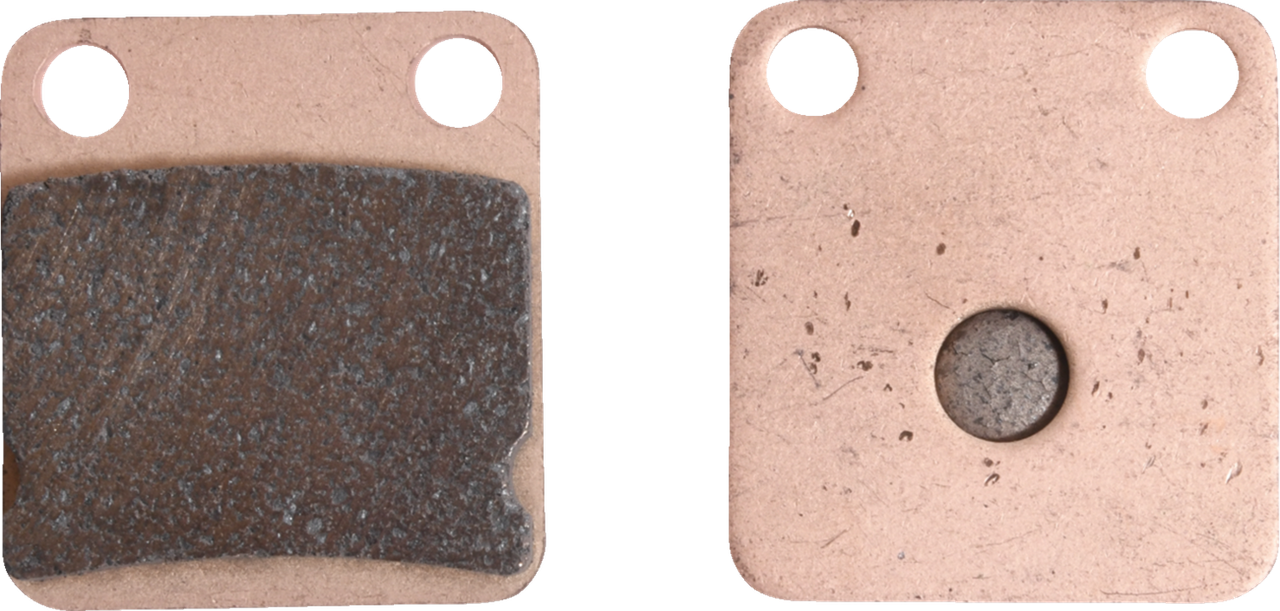
Brake Pads
About Brake Pads
Every stop presses friction material against a spinning rotor, so brake pads are a wear part with a limit to how thin they can get. They are the brake part most riders replace first, and it pays to change them before they wear down to the metal backing.
Listings here use compound and series names such as organic, semi-sintered, HH and XCR. Organic compounds are generally quieter and easier on rotors, while sintered compounds handle heat and wet weather better. Pads are made for a specific caliper, and many titles name the brand or model, for example Honda, BMW, Kawasaki/Suzuki and Husqvarna/KTM. Check whether the listing is for the front or the rear, and for a front end with two discs you will need pads for both calipers.
Brands in this category include SBS, EBC, Drag Specialties, All Balls and Moose Offroad. Pick your bike in the Ride Finder at the top of the page. Pads work against Brake Disc Rotors and sit in Brake Calipers & Brackets, with small parts in Brake Pad & Shoe Hardware. On a drum brake, look at Brake Shoes instead. The whole group is Brakes & Brake Parts.
FAQs on brake pads
Why do my brake pads squeal?
Common causes are glazed or contaminated pads, missing shims or clips, dust, or a rotor that needs cleaning. Remove the wheel or caliper, check the pads and hardware, and clean with brake cleaner. Never lubricate the friction surface.
Do I need to clean the rotor when I fit new pads?
Yes. Wipe the rotor with brake cleaner so no oil or grease is left, and keep fingers off the friction surfaces of the pads. Contamination reduces braking and can ruin new pads.
Can I fit new pads if the rotor has grooves?
Light wear is usually acceptable, but deep grooves, a raised lip, or a rotor under its minimum thickness means the rotor should be replaced. Your service manual gives the limit. Measure it before you fit pads.
Do front and rear pads wear at the same rate?
Usually not. Most braking is done by the front brake on a motorcycle, so front pads normally wear faster. Check both, and replace each set when it reaches its wear limit.
How should I handle brake dust when changing pads?
Avoid breathing it. Do not blow it off with compressed air; wet it down with brake cleaner and wipe it up, then wash your hands. Ask your pad maker if you have a question about the pad material.