
Fuel Petcocks & Taps
About Fuel Petcocks & Taps
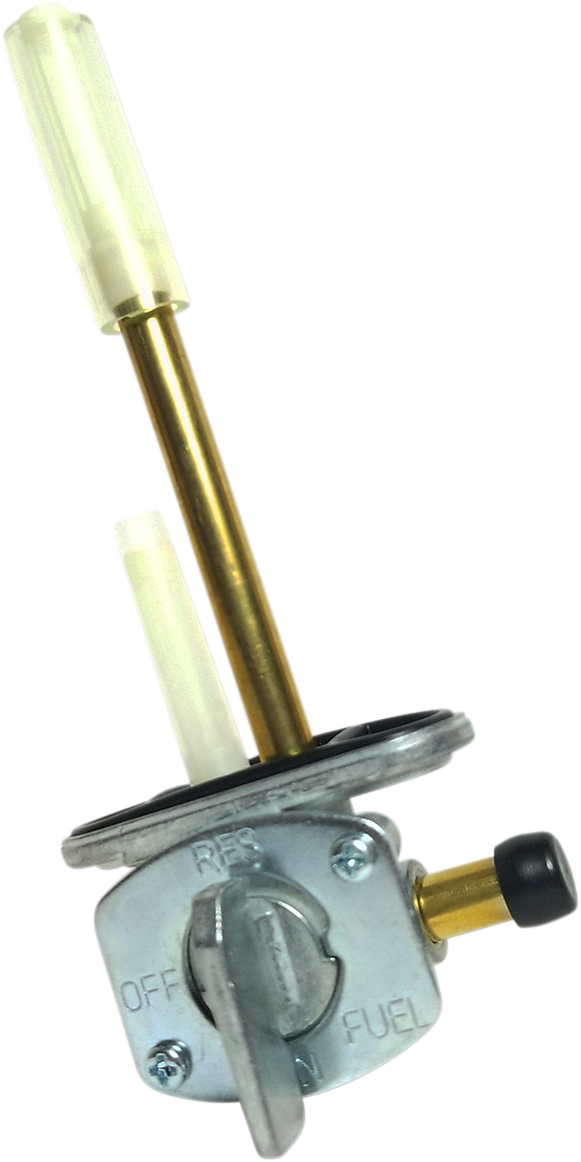
The petcock, also called a fuel tap or fuel valve, is the valve at the bottom of a carbureted bike's tank that opens and closes the flow of fuel to the carburetor. Riders shop for one when fuel seeps from the valve or its fittings, when a worn diaphragm lets fuel flow with the engine off, when sediment restricts the flow, or when a chrome or bronze valve is wanted for a custom tank.
The first choice is repair or replace. A repair or rebuild kit renews the seals, O-rings or diaphragm inside your original petcock, and it is the right fix when the body and lever are sound; the listings here include kits for Suzuki, Honda, Kawasaki and KTM models. If the body is cracked, corroded or the lever will not turn, replace the whole petcock. Then check the details: the outlet direction, such as downward facing, and the mounting size, which appears in listings as 22 mm for some round chrome valves. Match the part to your exact model and year.
Brands here include GET, Helix, Colony, HardDrive and Drag Specialties. A petcock works with Fuel Filters and Fuel Hoses, Lines & Pipes, and the carburetor it feeds is covered under Carburetor Parts and Carburetors. The wider group is Air Intake & Fuel Delivery.
FAQs on fuel petcocks and fuel taps
What do the On, Off and Reserve positions on a petcock mean?
On draws fuel from the main supply in the tank, Off shuts the flow, and Reserve draws from a lower pickup that holds a little extra fuel once the main supply runs out. Some vacuum-operated petcocks also have a Prime position. Switch to Reserve when the bike starts to sputter, then refuel and move the lever back to On.
Why does fuel keep leaking from my carburetor when the bike is parked?
A worn petcock diaphragm or valve seal can let fuel flow to the carburetor with the engine off, which may flood the engine or run out of the overflow. A float needle stuck open inside the carburetor causes the same problem, so inspect both. On a manual valve, turning the petcock to Off while parked is a good habit.
What does a petcock repair kit usually include?
Contents vary by model, but kits generally replace wear parts such as seals, O-rings and, on vacuum types, the diaphragm. Read the listing to see which parts are included and which models and years it is made for, because petcocks differ a lot from one bike to the next.
Do I need to drain the tank to replace a petcock?
Usually yes. The petcock threads or bolts into the bottom of the tank, so the fuel has to come out first. Drain it into an approved container outdoors, away from sparks and flames, and catch drips as you work. Check the new petcock for leaks before you refill the tank.
Can I fit a universal petcock to my bike?
Only if the mounting thread or flange, the outlet direction and the hose connection suit your tank and carburetor. Sizes such as 22 mm appear in listings, but your tank's fitting decides what works. When in doubt, choose a petcock listed for your model.